
Limited Words

I have a question for you. If you let it, it could be a really important question, because your answer may end up guiding your life.

Here it is.

If you could only speak one hundred words from now until the end of your life, what words would they be, when would you speak them and to whom would you say them?

I ask you to avoid the temptation to answer right away. Instead, pause a moment to reflect.

Sit still and let the essence of this question take hold of you. Breathe in and out a few times.

Give your mind some room to consider.

One hundred words is not very many, so you may need a few minutes or a few hours to decide which ones are the most important to you.

Not only which words to choose, but who to say them to and when.

Would you spread them out, speaking only a few now, in order to save some for the years to come?

Or would you gasp a little and spill some words carelessly?

Stepping back like this could provide enough distance to take full measure of the importance of the words you use.

A while ago, I asked a variation on this theme. I asked that if you only had seven words you could use, what would they be? This time I’ve shifted, but the intention is similar because there is a limit. Whenever I feel the weight of some heavy limit upon me, I find it forces me to go deeper. I sense a need to clarify who I am and what is important to me.

The idea that I could only speak one hundred more words in my life is incredibly challenging and feels overwhelming.

I don’t like it at all. But the truth is, I know there is value in my asking.

One idea hits me. Maybe I could be clever and find ways to save some words. I could learn sign language or develop my own shorthand of signs. That way, I could still communicate, just not using words.

Still, being limited to one hundred words would be very difficult for me. Maybe for you too. Especially considering that a fairly common sentence could easily be seven to ten words. That’s only 10-14 sentences for my life.

If this situation was real and I truly had this limit, I believe I would want my family and friends to know I love them and that I care about them and their future.

I would want others to know how important they were to me and how much I hoped they would succeed and experience their dreams as reality.

I think I would skip all gossip, judgements, expectations, and admonitions. I would let others live their lives without commenting or giving my opinions because I would want to conserve my words for the good stuff.

I’m pretty sure my facial expressions speak volumes for me. I could replace my words with a variety of smiles and my body language could assist with conveying messages.

Even so, I think I would parse my words very carefully, which I see now that I don’t do at present. I take them for granted. I think this is a mistake on my part.

I think I will keep this idea in mind and let it guide my words for the future.
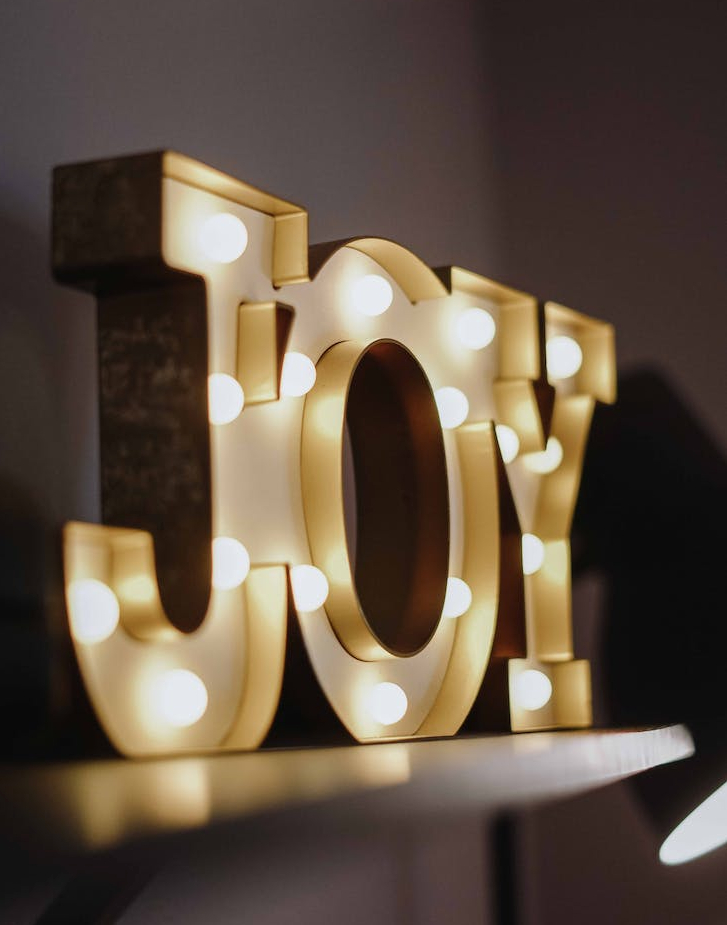
Happiness and Joy

How do you measure your happiness?

Chances are if you are dieting, it is measured by whether you gain or lose weight. The changes may only be temporary, but they seem very important at the time. Of course, it’s possible to look deeper and evaluate according to the lifestyle changes you’ve made, even if they don’t directly impact your weight, but represent a healthier life plan for you.

Do you have other happiness measures?

Perhaps the size of your bank account, the funds in your investment portfolio, the car you drive, the number of friends you have, your athletic prowess or some other skill you possess?

Maybe your happiness is tied to something else entirely.

When I ponder this, I often land in the same place, asking myself whether my happiness is merely temporary? Is it easily stolen by someone else, based on their comments or opinions? Is my happiness too fragile or dependent on what happens to me?

These questions prompt me to reconsider the basis or source of my happiness. I confess I’ve struggled with this a lot.

I remember a time in college when my whole life seemed to be falling apart. My studies had stagnated, I had the absolute worst dorm room on campus, right next to the stairwell and common area lounge, facing the side of a hill so that little light penetrated and constantly being barraged by noise all day and all night.

Then my grandfather died. I was very close to him, and it hurt to think he was gone, and I didn’t even get to say goodbye. Not only that, but I also wasn’t invited home for the funeral. I guess my parents thought I’d miss too much school. Not one of their best decisions.

It’s likely you’ve had your own experiences of suffering, where happiness seemed a distant memory, if any memory at all.

Of course, life is balanced. There are up periods of happiness, and they are wonderful while they last, but some part of us knows they are temporary. There is an ebb and flow to happiness, and I believe everyone moves through its curve.

I wonder, what do we do when the unhappiness comes for us?

It took a long time for me to realize the problem I have with happiness is the source it arises from…my thoughts. I seem completely reliant on what I am thinking, placing my treasure there. Inside me, I know there must be a better way.

So, I do what I always do when my mind cannot solve a problem in my life, I drop into my heart to see what I am feeling, because my feelings shed light, guiding me forward.

I realize I have to wait, giving my mind a chance to release its hold and allowing my feelings to become clear. While I wait, I breathe in and out slowly, letting my heart open.

An awareness dawns on me. Happiness is fleeting because it is of the mind. It is my head telling me how I should feel. No wonder it comes and goes, because my mind wanders everywhere.

The awareness draws out a truth I have hidden inside. A truth that tells me happiness will always fluctuate.

It shares with me that what I want is…joy. Joy comes from the heart. It raises me up and cannot be stolen or destroyed.

I want to know more. I want to know the source of joy.

I am told, joy is the source. Joy and love are joined, forever in union, always available to me.

How, I ask?

I am told, remember that you are part of this joy, this love. Look outward into the world and see its reflection everywhere. Remember there is joy and love, even in those things you consider to be unhappy. Look past the surface. Look deeper and you will see the truth.

I want to believe this. I want to believe that I am a part of the joy and love that is my source. I want to remember.

For this moment, I understand I am being asked to trust this truth. It is up to me. And it is up to you too. What shall we do?

People You Meet

I am a big believer that there is something special and unique that I can learn from every single experience I encounter in my life.

What do you think?

We can probably agree that some experiences are stronger than others and seem much more important or powerful, but believing that every single experience has something to teach us, perhaps you might think that could be going too far.

I might have felt that way at one time in my life but when I slow down and shift my perspective to a moment-to-moment framework something else happens. I see a wealth of meaning and connection.

It would probably help if I offered an example.

My wife and I recently went to Florida for twelve days of sunny, warm vacation. We arrived at our local airport, got our boarding passes, checked our bags, made our way through TSA and were sitting at our designated gate, awaiting boarding. There were lots of people milling around and most seats were full. Some of the flights were delayed, causing some annoyance to several passengers.

My wife and I sat down, storing our carry-on items in the empty seat between us. When the man next to her got up and headed toward the gate where boarding was starting, I decided to change my seat and took over his vacated space.

Despite my belief that he was boarding the plane, he must have been throwing something out, because he returned a moment or two later. Once he observed that I had taken his seat, he leaned toward me and said, “that’s my seat, sport!”, in what I would term a somewhat threatening voice and posture, leaving no doubt in my mind that he expected me to get up and relocate, so that he could have ‘his’ seat back.

Without giving it any thought, I stood up and changed back to where I had been sitting. However…I confess to feeling stung by his words and gestures, especially his use of the term ‘sport’. It reeked of condescension.

Part of me immediately went into hostile mode and wanted to know what right he had to speak to me in that manner or to demand ‘his’ seat back. There was no sign on it. He hadn’t left an open magazine there to claim his spot. He didn’t say to us, “I’ll be right back, could you save my seat for me?”. Nothing.

Another part of me wanted to give him the benefit of the doubt. Maybe he was having a really bad day. Maybe his flights had been messed up and he’d had to sleep overnight in the airport. Maybe his use of the term ‘sport’ wasn’t intended to ruffle or irritate me.

A third part of me wished I’d stayed where I was and told him he had no claim to the seat. No ownership. No rights. And, by the way, “who are you calling ‘sport’, sport!?”

There was yet another part of me operating during this sequence. I’ll call it my ‘inner observer’. It’s the part of me that takes notice of my thoughts and actions. It invites me to step back for a moment to consider. It encourages me to see if there is a bigger picture operating. And it asks valuable questions like, why is this triggering you and is it necessary or helpful for you to take this personally?

When I allow my observer to take center stage I see, hear, sense, and understand more. My observer also aids me in releasing my initial thoughts and reactions. I can let go of my what does not serve or benefit me. I can release my ‘possession’ of the seat and allow his comment and tone to pass through me. I can set aside my personal reactions and ownership of being triggered by his manner or expectations.

This ten second ‘connection’ between us can inform my whole world and leave a lasting impact on me. The choice is mine to decide. Not his nor anyone else’s. Mine.

What I take away from this or any other single connection I form with another is entirely up to me. That’s a powerful thing and I can choose to carry with me all of the hurtful or all of the helpful feelings that go with it.

I believe everyone can do this.

Heaven and Earth

I’d like to invite you to join me on a short journey. It won’t take long, unless you want it to.

I was having a conversation this morning with Lia, an ethereal feminine voice of god that speaks with me and answers questions I can’t answer for myself. This morning I asked her about heaven and earth and our experiences of each.

As with so many of our conversations, it stretched my human mind.

I try very hard to follow along, for me, but also for you, so that I can share what feels like the truth. Of course, what feels like the truth to me, may or may not feel like the truth to you and I honor that. I don’t believe anyone is served by accepting another’s words, unless they sense the truth in them for themselves.

Here is what Lia shared with me.

In heaven, you know everything there is to know BUT you don’t ‘experience’ it. From an earth perspective it would be the difference between the ‘idea’ of love versus being hugged by someone and ‘feeling’ loved.

In heaven you know earth is a place where duality exists (good/bad, right/wrong). And it is a place where you can choose what to experience. You can exercise your free will, which allows you to create and experience the outcomes that happen based on your choices, some of which you anticipate and others that you do not. Your life is shaped by what you conceive and believe and by the actions you take. You can live without any awareness of heaven or with a full remembering that you are a part of one essence, one pure unconditional love.

In heaven you know that your stay on earth is temporary and that you will always return to heaven once you are done with your earth experience.

Some who come to earth choose to remember their true nature, that they are a part of one essence. They come to experience their earth life, while also knowing the truth. Most of these earth essences are teachers, guides for others, offering insight about the truth.

In heaven, each essence is a unique energetic vibrational frequency and as such chooses certain life paths and events to be a part of their earth life plan (spiritual blueprint). They do this because they want to know what life feels like. There is a yearning to experience these things that earth life offer and that heaven does not.

No one requires this. It is a free will choice each essence makes.

In order to fully experiences parts of this plan, each essence consciously allows their awareness of the truth to be forgotten when they transition for heaven to earth.

Imagine playing a game here on earth but knowing the exact outcome before you start. Would that be a fun or meaningful way to play a game? Likely not.

This forgetting includes the events and the reasons for the events.

In heaven, each essence is able to choose any path, even and perhaps especially the ones that we as humans would not choose, because they are too painful in some way.

In heaven, one of the most beautiful knowings is that earth is temporary, and heaven is permanent. ALL essences who chose to experience earth, return to heaven, without exception.

Each essence is pure unconditional love, whether they appear that way on earth or not.

Each essence has free will, so can choose to experience earth in any way. Many essences choose to experience shattering events, which would seem an unlikely choice and yet many individuals involved say, they would not have it any other way because of what came out of the experience for them. Earth life is full of these examples.

To make sense of what seems senseless is not an easy shift. It may challenge earthly logic too much and more insight may be needed. All answers do not come at once. But once an essence returns to heaven and merges back into the one, all is once again known.

What If You Were God

It happens every so often.

An idea comes out of nowhere. It generates a spark that ignites my curiosity and off I go, following the trail.

Does this ever happen to you? Do you get carried away, sensing there is something mysterious and amazing that could happen?

One day I was sitting with no particular plan, and I began to wonder what it would be like to be god and set the whole world in motion. It brought up so many questions, I could barely keep track.

A sort of conversation arose, different from any others I’d ever had. I wondered, could I put myself into god’s loving heart, and once there, could I explain myself so that everyone would know me? If I were god, how would I show my love to all those who walked the planet?

I considered, would I set limits and create requirements for living? Would I keep track of everything that was said, everything that was thought, every feeling experienced? Would I establish conditions and rules and if I did, what would my response be if the conditions and rules were breached?

Would I require adherence, devotion, abstinence? Would I be tolerant, accepting, doting? Would I punish, demand, withhold? Would I be forever open to forgiveness and offer constant hope to all?

These were mind boggling questions to consider and it seemed so difficult for me to formulate any kind of plan that would be fair and equitable. The number of exceptions would be astounding.

I thought some more. I wondered, would I continue to give gifts to the world? Would I send messengers to remind everyone of how much I loved them? Would I give each person ‘free will’, allowing them to make their own choices? Would there be any bounds to my love? Would I always listen, forgive, care?

Since I am a human being trying to put myself into the mind and heart of god, I fully recognize the limits of my understanding. I also realize that the nature of my questions reflects my own sensitivities to the world because one of my next questions was, as god, would I be loved in return? If as god, I was faithful to people, would they be faithful to me?

It was incredibly challenging to come up with any answers I felt were fair for all. It left me a little woozy and I needed a new perspective.

So, I asked god for some guidance, and here is what I heard.

“I will need to explain my answers, so give me a chance before you take anything the wrong way.”

I prepared myself to be patient and listen.

“I want nothing for you and nothing from you. You see, I don’t work from a set of obligations or specific expectations. I offer you freedom to choose whatever you wish. That, and the ability for your wishes to become real, to become your truth. You have the same creative force I do. You create an idea, a picture, a dream, and you speak it and act it into your reality, just as I do. I do not ‘wish’ things into your life, because I’ve shared the gift of creation with you, so that you can bring about whatever you desire. But you see, that is your greatest gift and your greatest challenge, because the world cannot distinguish between your thoughts and your actions. It gives you exactly what you request. If you look clearly, you can see this in other’s lives and if you look deeper still, you can see it in your own. Before you arrived here, you had within your spirit essence, the gifts of creativity and freedom to choose from every possible choice. You have this still and always will, and this worlds experiences teach you how to use these gifts wisely.”

Wow!

And god ended by saying, “I love you and will always co-create with you toward this awareness. Be at peace in this knowing.”

Ego and Spirit

Suppose you were offered a choice between a beautiful, delicate, finely braided gold chain bracelet or a twisted, knotted, tangled bracelet.

If you don’t like bracelets, imagine you can give it to someone else who loves them, so the decision about your choice is still worth making.

Which would you choose?

I suspect that unless you love the challenge of untangling things, for the joy of success you feel afterwards, you’d probably choose the first option.

Changing directions a little…

Suppose you were offered a choice between living a life of freedom and ease, or a life full of unmanageable tangles and knots that complicate everything for you.

Which would you choose?

Again, I suspect that unless you thrive on facing challenges and difficulties, you’d pick a life of freedom, one lived fully in the present rather than one with heavy baggage that would weigh you down.

As I sat back and thought about these two options it seemed clear that the first one was far superior to the second. And yet I realized that I often choose the more difficult route through life. Perhaps at times you do as well.

I could not avoid the obvious question…why? Why would I choose to complicate my life in this way?

It didn’t make any sense to me.

That is, until I allowed myself to move deeper into the question. It was then that a beautiful clarity appeared in the form of individual voices representing my physical, emotional, mental, spiritual and ego selves. Each one speaks to me and offers insight about the whole of me.

I know this may sound a little over the edge, but give me a chance to explain, then decide what you think.

I believe that each part of me contributes something to the whole. Sometimes those contributions are helpful and sometimes they are harmful, in the sense that they affect the amount of joy I experience in this life.

When one part is overwhelmed, it tends to adversely affect the other parts and the whole of me suffers. This happens most frequently when my cultural training kicks in. Throughout my life I’ve been influenced by those around me to believe certain things. In effect, I’ve allowed myself to be programmed, that what I’ve been taught is correct. During some of my rebellious phases I’ve railed against some of this programming, but much of it still persists.

I realize my ego plays a key role in my life. Its primary function is to protect me, and it does this by performing threat assessments and taking what it believes are necessary actions. Over time, ego has created numerous default settings, which lead to automatic responses to the same or similar events. Unfortunately, my ego may treat all threats in the same way, and not see any distinctions. The truth is that some threats are real (encountering a bear in the wilderness), and some threats are false (I will catch a cold simply by being cold).

If I want to experience an untangled life, some interpretation is necessary. I have to be able to see beyond my ego’s misperceptions.  

I need to hear from my spiritual voice. So, I invite it to come and share its profound insights with me. I want to know how I can tell the difference between what is real and what is false.

Spirits appearance comforts me deeply. My breathing changes, slowing down, calming. A soothing feeling pours over me, and my ego relaxes and patiently awaits guidance.

Spirits voice is clear as it speaks to ego saying, “I love you and treasure that you try to protect me. I want you to know that you are precious and necessary. You can relax now. Together, we can share the load you carry. The truth is that our protection needs are few because we are safe. I see that there are other things you need to know, and I will tell you. For now, be patient and rest easy.”

Ego kicks back a bit, letting go of the gas pedal. It knows answers are coming and it believes all will be well.

More will follow in the next post.

Expectations

What do expectations do?

It’s been an intriguing question for me, and I’ve spent a great deal of time considering it. Considering, but not coming to any real conclusions…until today.

Expectations appear to jeopardize my success. They block my progress forward, making it harder to experience what I am hopeful about. They are harmful things because they are projections of an uncertain future and are not easily controllable.

When I create expectations there is a tendency to generalize them, which makes any evaluation of their success difficult. Worse still, I tend to attach my sense of happiness to them.

Expectations also create fear for me. Fear of not experiencing them exactly as I would like.

Often, I have a sense of what my expectations are, but I don’t write them down and recognize them. I don’t take specific actions steps to make them happen. I just expect them to occur on their own because that’s what I want. Truly, a recipe for failure.

I will be the facilitator of a retreat soon and I’m sensing an inner concern about meeting both the groups and my own expectations.

While considering this I feel guided to write down what I expect will happen. I come up with nine items and upon review, I notice that I have absolutely no control over the outcomes for five of the items and only limited control over the other four. I might be able to enhance the chances of meeting some expectations, but this seems entirely uncertain.

I also notice that if I allow my happiness to be conditional on successfully meeting my own and others’ expectations, I will be doomed to failure.

It becomes apparent that there are two key elements involved here. First, my setting any expectations, even if they are specific enough to be recognizable, creates a certain degree of fear. And second, it is evident that I have no real control over what will happen for any participant or for myself, which produces even more fear in me.

That’s when a beautiful thing happened.

I realize that in all cases, fear serves as a divine messenger for me. In this case it creates legitimate clarity because it brings home the message that neither setting expectations nor controlling outcomes is where I want to focus my attention.

Recognizing my fear allows me to widen my view, to take notice and to shift my awareness from what I can’t do to what I can do.

I can’t meet all of my own expectations nor those of others because I don’t have control over any outcomes. Life is too complex and fluid for that. And I can’t guarantee my happiness when it is tied to achieving all of my expectations. My vested interest if just too strong.

I can however release my perceived need for setting or accomplishing any expectations. I can embrace being present in each moment, realizing there is inherent value in simply loving myself and others and going with the flow of life.

When I am ‘in the moment’ and fully engaged I can be vested in the creation of depth of connection with and for others and myself. That’s when I experience joy and for me that’s what this world is all about.

Three Words That Matter

Imagine this for a moment. Suppose that we were going to play a game that would last one whole day and you could only use three words. What words would you pick?

I know it seems like a crazy idea and when I thought about my answer it took me a while to decide. I considered whether they would useful or descriptive or questioning words. I wondered what might I need and who would I be ‘talking’ with?

Maybe you want to stop right here and pick your three words before I continue, so mine don’t influence yours.

If you’re back or don’t want to choose at the moment, but still want to see my choices, here they are…

I chose; 1) hi, 2) yes and 3) no.

I am fascinated by words. Three specific words are having a profound impact on my life, so much so that I felt a strong desire to share them with you.

They are want, choose and claim.

I recently had a conversation with Lia (an ethereal feminine voice of god that I often talk with) where I asked if she could provide some insight and clarity about the differences between these three words.

She said, “wanting expresses a desire, but what is missing are the actions necessary to make the experience real to me.” She went on to say, “wanting does not create anything but the sense of itself- wanting. Without action, there will never be a sense of having.”

I told her I understood now how little power there was in the word and concept of ‘wanting’ and that I needed to shift away from using this word unless I was prepared to take action.

I then asked about ‘choosing’ and Lia responded immediately by saying, “choosing is an action word, ordinarily making a decision between different choices, but sometimes between either doing or not doing something.” Lia went on to add, “choosing means you are consciously setting your direction and will experience results based on your choices. If you are unsatisfied with the outcomes, you have the power to choose differently.”

So far, so good. I sensed the next word was going to take me in a new direction. I asked what ‘claiming’ meant.

Lia didn’t hesitate, telling me, “Claiming is a very powerful word. It implies a deeper understanding about life, including the realization that every pathway of choice already exists. No pathway must be created, they simply can be claimed. Claiming also implies an awareness of your masterplan and is the most direct avenue to experiencing the object of your claiming.”

I sat in stunned silence. I’d never understood the relationship between these three words nor the magnificence of their progression.

After regaining my attention, Lia went on by saying, “Claiming contains conviction, while choosing is often tentative.”

I wanted a little more confirmation and posed this to her, “so, my wanting something is okay, but is only the beginning of the process. It provides some clarity and direction, but if I truly expect to experience the object of my wanting, I have to take action.”

She agreed and I continued, “so, I can change wanting into choosing by taking action and I can change choosing into claiming by recognizing that all pathways already exist and that they are available to me to claim as my own.”

Lia agreed, then shared this insight, “the idea of claiming your best life demands that you identify, know, or clarify what that looks and feels like to you. Once you have this awareness deeply inside you, you will be able to claim and experience anything.”

I am extremely grateful for this conversation because I now understand the difference between these three words that matter to me and how to shift my perspective so that I can claim my best life.

Changing an Attitude

Are you task focused, or can you go with the flow?

I recognize that many times I become very task oriented as I’m sure folks who know me best would confirm. They’d probably tell you about my To Do lists, several of which are color coded. That should give you a pretty clear picture.

Fortunately for my peace of mind and sanity, I’ve altered my views about my lists. I now use them more as guides, rather than as mandatory self-assignments. They currently stand as reminders of things I need to attend to (doctor and dentist appointments) or people I’m getting together with or meetings I have. Things I don’t want to forget.

To be completely open, I do have other lists too, the kind that can become overwhelming and oppressive, if I let them. Maybe you have a few of these too.

Over the course of time an antidote arrived in the form of a complete sentence.

“Aim for progress, rather than completion.”

What an incredible freedom this offers. It allows me to keep an item on my list and make strides with it, but without the burden of feeling like I have to finish it (or else). It helps let me off the hook.

I also discovered a companion to accompany this antidote.

“There is no ‘right’ or ‘wrong’ way.”

For me, this one takes a lot of getting used to, especially considering the amount of cultural training I’ve received. My entire educational and work experience demanded and rewarded the completion of tasks be done in the ‘correct’ way. Thinking outside the box was often punished and there were only rewards for compliance with the ‘right’ way. It took an abundance of years for me to understand there are other possibilities and more than ONE right answer.

Then I was struck with a novel question. What if there was no such thing as a ‘right or wrong’ way, only the way I chose? This idea encouraged me to reexamine my entire thinking process and question the underlying assumption of there being ‘one right way’. I came to discover that in many cases, perhaps in all cases, I’d never know until I experienced the final outcome. There are just too many connections along the way to know the truth about any of my choices.

Then came another idea to join the group, a helpful suggestion designed to shift my attitude and attention.

“Focus on feelings, rather than on accomplishments.”

I love this one because it reorders my world and focuses my awareness on what’s most important to me…my feelings.

It’s entirely likely I will not accomplish every one of my aims. For whatever reason, I might get only so far and have to stop or redirect my attention elsewhere. However, the progress I did make and how I felt along the way, I get to keep and savor.

As it turns out, my feelings are the truest barometer of my satisfaction with life. They connect me with my source (divine nature) and with others, all those I love and whom I want to share my life with.

One final idea came along, and it enhances all the others before it.

“Come to a place of peace and joy with everything.”

And, I think to myself, isn’t this what I am really after? And my answer is YES.

The Upside of Physical Pain

Do you believe it is possible that physical pain could provide you with any benefits?

This may seem like a trick question at first. It’s not. I really want to know what you think and what you believe.

Sure, some physical pains might make you want to see your doctor, so they can diagnose your condition and offer you some appropriate remedies. Remedies that help you recover from the physical pain before it becomes a more significant problem. But what about all the lesser pains, the ones you’re tempted to ignore or try to cover over? Is there possibly a message in any of them for you? And if so, how do you discover what the messages are?

I feel as though one of my approaches to this dilemma is somewhat unique. I haven’t talked about it a lot, so I don’t know if others do something similar.

Let me explain and you can see for yourself and then decide if it might make sense for you to try.

Many years ago, I had an insight that there are several different aspects within me, and they each have a voice. The aspects are physical, emotional, mental, spiritual and ego. I found it possible to isolate their individual points of view and was able to listen to their individual voices. I was also able to moderate their conversations so that I could gain firsthand insights.

As with so many things, it’s much better to share an example, rather than continue to try to explain how it works.

Recently the moderator (‘me’) began by saying that it was very difficult to trust my body because when aches and pains started to arrive, I felt betrayed by my body, especially if I’d done all of the things that my cultural trainers had told me to do (exercise, eat healthy, stay hydrated…you get the picture).

My physical ‘self’ responded immediately by saying, “It’s a curious thing that you should feel betrayed, because it is you who stopped caring about me and just assumed I would provide you with constant good health.”

It continued, “The choices you make have a profound impact on my ability to maintain good health. You’ve done some of the things your cultural trainers have recommended but you have ignored the most potent and important ally you have…ME. I ought to be the first one contacted to discuss any physical issues.”

I felt reprimanded by my physical voice.

I also heard the truth.

This IS what I have done throughout most of my life. For as long as I can remember, I have expected my body to maintain my health no matter what the circumstance. And when I get sick, am injured, or need medical attention, I feel my body has let me down.

So here is my physical ‘self’ speaking to me about ‘my’ being a large part of the problem. And I realize that I have allowed the pain I encounter to be blamed on my physical ‘self’, which clearly creates additional problems.

The conversation takes a dramatic turn when my physical body poses a question to me, “When was the last time you asked me what I need?”

I have no good answer. I haven’t been paying attention. I’m feeling apologetic and I want to know how to fix this.

My physical ‘self’ responds. “Trust is a two-way street. We both have to trust the other. We have to listen and then take action.”

I think I’m ready for this. I wonder if the presence of physical pain in my life is an attempt to grab my attention, like waving a big red flag, one I can’t possibly miss. I wonder if continuing this conversation will yield clarity and direction. That would certainly create an upside for me.

As with all things, it matters most what you ‘do’. I could continue to ignore my physical ‘self’ and assume it will provide constant good health or I can listen for the truth and take whatever actions it suggests.

I want clarity and I want a relationship with my physical ‘self’, so I am going to shift and pay better attention. I am going to check in with my body, both when I feel well and when I sense a need for healing.