One More Day

Have you ever been in a rainstorm that was so hard you had to use your fastest wiper blade setting and even then, it was difficult to see?

I was in one of those recently. Usually, I’m not overly concerned but I found this storm a bit nerve wracking. And then I came upon a section of the road that had high walls on both sides. Despite the drainage built into the road, all of the water from the heavy downpour was trapped and flooding the highway.

There was nothing I could do except to keep going.

The car next to me hit a wall of water and splashed it up and over my minivan, burying me inside the wave. I couldn’t see anything but water cascading over me. One second, two, three. Nothing.

I held on to the steering wheel in hopes that I would come out the other side and still be in my lane. And that there wouldn’t be anyone there. And that the car behind me wouldn’t run into the back of me when it appeared. And that the car to my left, that began the shower, wouldn’t veer over into my lane.

I kept my eyes open and said, “Oh, my God!” three times before the wall of water fly off my windshield.

Surprisingly, no other cars were on the road anywhere near me. I drove along, hands on the wheel, eyes starring disbelieving ahead of me to a clear wide-open road, as if it was any other day.

Wow!

I’ve never experienced anything like that and frankly, I hope I never will again.

I continued on, expressing my gratitude for coming through that experience safely. I tried to slow my breathing and take it all in.

A question formed in my mind.

How was it possible for all of the cars to make it safely through that dangerous place?

I’m sure there are a host of ideas and explanations, but what I really wanted to know was, would that experience change me? Would I reflect on it as a turning point in my life? A dividing line of some sort? A second chance?

I’ve been thinking about that lately.

I know there have been other times in my life where I skirted death. Maybe the same thing has happened to you. Maybe more than once.

Did it change you? Did you step back and wonder?

After considering this for a little while I’ve come to the conclusion that I can change my outlook any time I want to. Any time I choose to. I don’t need a hugely significant frightening experience like this to prompt me into action.

I can give myself a second chance any moment of my life. And so can you.

No matter what is happening, you have the power to choose your attitude. You can take one step, and then another. You can build a new you.

Every time you wake up, you have one more day. You can make it count. You can let joy fill you and overflow, if you choose.

Seeing the open road in front of me after the water fell away reminded me that I have more time and that it’s up to me to decide what to do with it.

So, I’ll leave you with a question…what are you going to do with one more day?

Anger

What generates your anger? Is it fear, perhaps of some outcome you don’t want to experience?

This is certainly true for me, and I wonder what I can do about it. Are there ways for me to block it, dissipate it, resolve it, avoid it, or allow it to pass through and out of me?

It feels important to me to understand anger better, so that I can decide how to respond. What I’ve learned so far is that I have trigger points, easily recognizable events that signal my anger is rising. And I understand that I need to make a conscious decision as soon as I feel the first spark fly.

I cannot always do this. It would surely be nice, but I can’t so far and I realize I may need some help to get there.

I wonder, why do I want to express my anger? What do I get out of it? It might feel good temporarily, in the heat of the moment, but I’m reasonably sure that it will wear off and I’ll be left feeling badly, knowing I could have responded better.

So, I’m back to my original question of why I get so angry sometimes. I’ve certainly seen it modeled in my life and I have precious little exposure to anyone who doesn’t express anger in theirs.

There are some folks who have been so thoroughly trained not to show anger that they hold it deep inside themselves until it explodes, often without any warning. That must be an incredibly difficult way to live.

What I want is to be in the presence of someone who allows anger to pass right through them without holding onto any of it. I want to know that secret.

But, since I haven’t met anyone like that, I am choosing to walk another path, one that leads to Lia, the ethereal feminine voice of god that speaks to me and offers guidance and support.

I sit back, relax, breathe in and out slowly and prepare myself to listen. I ask for help and open space for Lia’s magnificence to make a divine connection.

As always, she comes to me, ready to invite me into her depth. Here are the words she spoke to me.

“Like all things born of fear, anger arrives to redirect you to the truth. It is another message, a way of showing you the path that leads to love.”

“Anger prompts you to pay close attention to your heart. To release what your mind suggests, and your ego tells you is important and encourages you to shift to your heart and your spirit.”

“You know this is the truth because you FEEL it and you KNOW it. It is not up to me to convince you of anything. I merely point out the path you say you most want, the one that leads to joy.”

“When anger arises in you or in reaction to another, decide what is important to you, releasing fear and embracing love. It really is that simple.”

“If you wish to be free, choose love.”

I tried to absorb all of what she told me. I sat and let it soak in, every bit of it and I wondered whether there was anything else she wanted to tell me. I quieted, waited, and asked Lia if there was something more it would be helpful for me to know.

“Yes, know that practice creates change and change creates new patterns. Choose the patterns that reveal love.”

I am so grateful to know there is hope for me and for you too, if you choose this path.

Expectations

What do expectations do?

It’s been an intriguing question for me, and I’ve spent a great deal of time considering it. Considering, but not coming to any real conclusions…until today.

Expectations appear to jeopardize my success. They block my progress forward, making it harder to experience what I am hopeful about. They are harmful things because they are projections of an uncertain future and are not easily controllable.

When I create expectations there is a tendency to generalize them, which makes any evaluation of their success difficult. Worse still, I tend to attach my sense of happiness to them.

Expectations also create fear for me. Fear of not experiencing them exactly as I would like.

Often, I have a sense of what my expectations are, but I don’t write them down and recognize them. I don’t take specific actions steps to make them happen. I just expect them to occur on their own because that’s what I want. Truly, a recipe for failure.

I will be the facilitator of a retreat soon and I’m sensing an inner concern about meeting both the groups and my own expectations.

While considering this I feel guided to write down what I expect will happen. I come up with nine items and upon review, I notice that I have absolutely no control over the outcomes for five of the items and only limited control over the other four. I might be able to enhance the chances of meeting some expectations, but this seems entirely uncertain.

I also notice that if I allow my happiness to be conditional on successfully meeting my own and others’ expectations, I will be doomed to failure.

It becomes apparent that there are two key elements involved here. First, my setting any expectations, even if they are specific enough to be recognizable, creates a certain degree of fear. And second, it is evident that I have no real control over what will happen for any participant or for myself, which produces even more fear in me.

That’s when a beautiful thing happened.

I realize that in all cases, fear serves as a divine messenger for me. In this case it creates legitimate clarity because it brings home the message that neither setting expectations nor controlling outcomes is where I want to focus my attention.

Recognizing my fear allows me to widen my view, to take notice and to shift my awareness from what I can’t do to what I can do.

I can’t meet all of my own expectations nor those of others because I don’t have control over any outcomes. Life is too complex and fluid for that. And I can’t guarantee my happiness when it is tied to achieving all of my expectations. My vested interest if just too strong.

I can however release my perceived need for setting or accomplishing any expectations. I can embrace being present in each moment, realizing there is inherent value in simply loving myself and others and going with the flow of life.

When I am ‘in the moment’ and fully engaged I can be vested in the creation of depth of connection with and for others and myself. That’s when I experience joy and for me that’s what this world is all about.

Paradox to Paradise

If I asked you, could you define or give me an example of a ‘paradox’?

It’s interesting to me that we can often recognize a paradox when we hear it but aren’t able to explain why it’s a paradox. According to one internet source, a paradox has three key elements or aspects. First, it is a statement that contradicts itself. Second, it seems absurd and third, it points out the absurdity of life.

My post title begins with paradox but implies a movement to paradise. We may all have our own definitions for the word ‘paradise’ but I’m going to suggest we start from a common point, that paradise represents an ideal place or state of being.

So, you may be wondering, how do these connect and why would I spend time writing a post about them. Good question.

I’d like to share two examples and hopefully they will provide the answer.

When I mention the word, ‘failure’, what comes to mind? Perhaps it’s something you’ve experienced in your life, in the past or something happening right now.

A common understanding of failure is that we don’t reach our objective, however we’ve defined it. Or maybe it’s how someone else has defined it. They may have placed demands on us, and we were unable to meet their expectations. Often, failure is challenging because there are so many potential opportunities for it to occur and it may become overwhelming to continue our pursuit of success.

I’d like to invite you to consider shifting your attention and your view of ‘failure’. What if you altered your concept and embraced the idea that failure, is the absence of trying? That failure has nothing to do with any outcome, so that you are free from any expectations of success.

What if you gave yourself permission to TRY, recognizing that it may or may not work out exactly as you plan, and accept whatever outcome occurs? In this way, ‘failure’ has a built-in freedom.

Seems like a paradox to me which leads to a paradise of freedom.

The other example I’d like to offer is, ‘fear’.

I’m quite sure I needn’t provide you with any illustrations of fear. I believe we all know intimately about fear and its impact on us.

One of fears hallmarks is that it prevents us from living our lives to the fullest. It can overshadow, overwhelm, intimidate, riddle us with intense feelings and stop us in our tracks. Fear disguises itself, masquerading as seeming logical statements, but its intent is always the same…to prevent us from moving forward and living a satisfying life.

There is another way to view fear. We can shift our perspective and claim a new concept, one that can dramatically alter our outcomes.

How?

By seeing fear as a source of power. I suspect that each of us has felt the enormous power fear manifests. If we shift our understanding, we can harness fear’s power and use it to our advantage. I’d like to suggest that we consider that fear exists to provide us with a valuable message. If we allow it, the message can show us how we would benefit by changing direction. Fear can serve as an energetic motivation to give us the drive we may need to improve our lives.

Seen in this way, fear becomes a divine messenger, offered to us to assist in moving the direction we most cherish.

Feels like another paradox to me and one which can certainly lead to paradise, if that is what we choose.

Steps to New Beliefs

Recently I’ve been thinking a lot about the beliefs I hold and wondering if they all benefit me.

If I asked you, would you say that all your beliefs serve you? Do they help you throughout your day, save you time, improve your relationships, make you happy?

Have you ever wondered if you would be better off if you changed some of your beliefs?

Either fortunately or unfortunately, I ask myself this kind of question all the time. I’m happy about it when the answers come easily, but not so happy when they don’t. I have to confess, more often than not, they don’t come very easily.

However, what I’ve also discovered is that that’s not a bad thing, because much of their eventual benefit to me is found in the struggle I have while considering my beliefs.

Even so, I do occasionally get stuck and need some help digging out.

By now you probably know my source for aid often comes from Lia, a feminine voice of god that speaks gently to me.

When I reached a low point in trying to mentally figure out the origin and benefits of a belief recently, I became fatigued and disappointed. That is always my cue to sit back, close my eyes and breathe deeply, allowing my mind to take a much-needed break. It is then that I can hear Lia’s voice clearly.

So that’s what I did, and I was absolutely shocked by her words and contribution to my sanity.

She guided me through a process which transformed something in me. It shifted my whole perspective and gave me a fresh approach to use, one that felt very right to me. It felt so right in fact, I wanted to share it with you.

Lia cautioned me to not make it too formal a process, but rather to listen to the intent of each of the series of steps she provided. For me, the name I used for ‘beliefs’ in this case was, ‘problems’, so when you see the word appear, remember this is my reference.

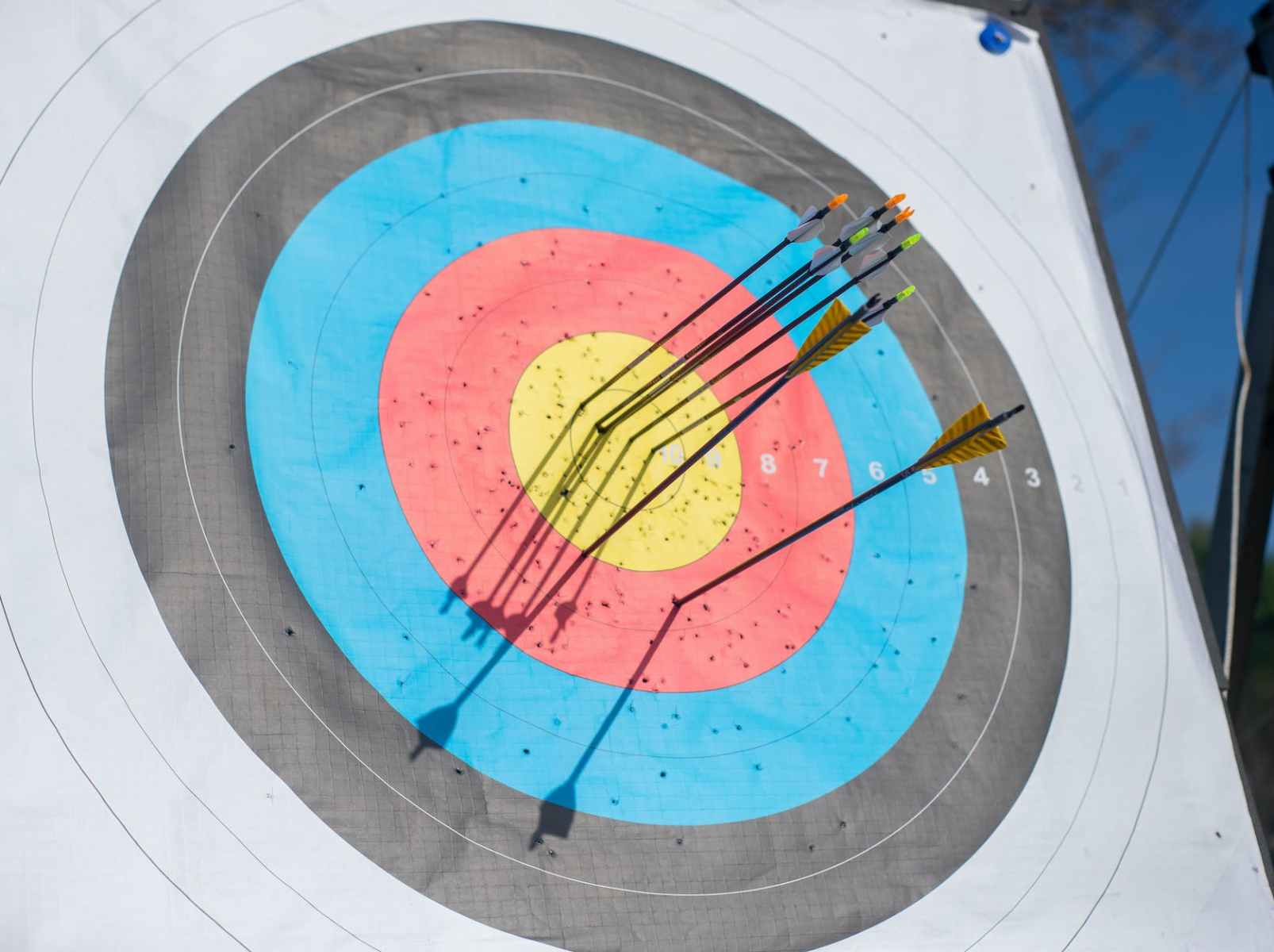
Step 1: Identify all of your ‘problem’ areas, because it is very difficult to hit a target you cannot see or name.

Step 2: Note (list) your obstacles and objections about this process. Be candid about your roadblocks. Take note of each of your fears as they appear.

Step 3: Review you list of obstacles and objections, then reread them and note any clarifying thoughts. See how fear drives each of them and consider whether ONE speaks for all the rest (this would be your primary fear).

Step 4: Examine your primary fear and realize that every fear is a message about a belief you have.

Step 5: Explore all of the messages you encounter. Ask the primary fear- how will my answers speak my truth to me? Or in other words, what is their purpose? Recognize that the answers are always tied to your spiritual blueprint (the experiences you came here to earth to experience). Know that each message is drawing your attention and will become louder, until it has your full attention.

Step 6: Realize that your beliefs form the basis for all of your experiences in life and that shifting your beliefs allows you to create (choose and claim) any reality you desire.

Step 7: Applying the message reveals ways to shift your life (through choosing and claiming) so that you live a new truth, one that will serve you.

I am currently playing with this new approach to understanding my beliefs and shifting the ones I feel will be most worthwhile to change. So far, I’ve discovered some rich rewards and I hope you experience the same thing, should you decide to give this a try.

Hazardous Waste Day

Do you live in a place that has a hazardous waste day, a time when you can gather up all of the things you can’t put in the trash because they are too dangerous and drop them off where they can be properly recycled or disposed of?

My town does and I’ve been waiting a long time for it to come.

Incredibly, I have over 40 empty or partially used cans of paint, a host of cleaning products we no longer feel comfortable using and lots of small miscellaneous containers filled with I don’t know what exactly. They all need to go and I’m hoping it isn’t too much.

When I looked at the ‘acceptable items’ list it was overwhelming, from aerosol sprays, to fertilizers, fluorescent bulbs, mothballs, paints, resigns, weed killers. There were over 70 items and the first thing I wondered was where they were all going to end up?

It made me realize how much we contaminate this planet, and I pondered the magnitude of the situation. The factories that produce the items, the transportation to get them to market, the consumers who use them, and those who hopefully find safe ways to recycle or destroy them.

A nagging thought popped into my head, can they all actually be handled safely and destroyed, or do they live on and on?

This post was not meant to be a social commentary about our society and how we tend to turn a blind eye to cooperating with our environment. But it is sobering to consider.

I think it would be a meaningful question to ask myself…what is my contribution? Am I being a good steward of the earth’s resources? Most days, I wonder if I am.

And then another thought ran through my mind, offering me a new question.

What hazardous waste do I carry inside of me? What thoughts and patterns do I engage in that create toxic results for me?

I wondered what kind of a list would be generated if I sat with this for a little while. So, I did just that and here’s what came easily to me.

My Hazardous Waste List

Resentments (most of them pretty petty), prejudices (despite my best efforts not to), expectations (of the ways I think things ‘should’ be), anger (typically about things that don’t even matter), assumptions (which often lead to trouble), misperceptions (because I don’t wait long enough to see the whole picture), and blame (for things I don’t feel are my ‘fault’).

Do you recognize any of these? Are you home to any of them?

And given that I don’t like to get stuck in the middle of any process, I began contemplating what I could do with them. Was there a place I could put all these hazardous waste materials (thoughts)? Was there somewhere I could take them to drop them off and be rid of them?

I believe this is a question worth asking. I realize that one person’s method may differ from another’s; however, I think it’s often helpful when you hear what others choose to do because it might also help you and it might be something you would never think about on your own.

So, here’s my choice of what to do. I bring to mind an item from my list and ask myself one simple question.

Do they come from love or fear?

If they come from love, then I choose to keep them, but if they come from fear, I choose to release them. It’s a conscious decision. If, for example, a resentment surfaces, I have to look at it, accept it, and recognize that at least in part, I own it. It is a part of me, but one I no longer wish to keep, so I give it away. For me, I hand it off to Lia, a feminine presence of god that loves me and helps to guide me. She takes it and it vanishes. And if it returns, I give it to her again.

For you, there may be other places to drop off your hazardous waste. You might write them down and burn them. You might send them love and if they come back, send them more love.

Whatever method you find that works for you, I encourage you to let go so that you can live your best life. May it be so.

Suspending Judgement

I’d like to ask you three questions.

Here are two simple requests before I do, which are really the same thing stated two different ways:

1. Please don’t THINK about your responses and

2. Be SPONTANEOUS.

When was the last time you felt judged?

For some, this might have happened a minute ago, for others it might be longer. For some unfortunate folks, their response might be, “it happens all the time!”

Okay, question two.

When was the last time you judged someone?

We’d probably prefer not to answer, or we might be tempted to give ourselves some latitude with our answer. This type of judgement can happen so quickly we’re not even aware we’ve done it.

And lastly, question three.

When was the last time you judged yourself for something?

This might be the most difficult to answer. It can be challenging to give ourselves a pass and not find fault with our actions. In addition, we’re pretty good at repeating patterns that have been taught to us, where judgements have been placed upon us so often that it’s no longer necessary for someone else to initiate them, since we now do it to ourselves. Regrettable, self-judgements can become one of our automatic responses in life.

I’m curious. Which of these three questions was the easiest to answer?

Question one often permits us to blame folks outside of ourselves, question two offers us an awareness of our role in the judgement process of finding fault with others and question three focuses on self-criticism.

I wonder how often our patterns run on autopilot. I also wonder what amount of time we accept others judgements versus create judgements about others. Perhaps they are part of a circle of judgement where they run together and become almost unrecognizable to us.

When I get wrapped up in this process, I find it difficult to stand back, even while knowing I need to observe it all from a distance. On my good days I stand far enough away to see that all forms of judgement hurt everyone involved, both the sender and receiver.

So, I ask myself three new questions, why do we do it, who does it serve and how does it prosper anyone?

My answers to these questions seem simple enough to me…we do it because we allow it to happen, it serves no one and it prospers no one.

The truth hits me hard, I judge as a way of placing myself above others, as if I am special and others are not, as if they are less somehow than me, therefore subject to judgement. It’s a terrible feeling and I want to make changes, but how?

I believe for me that it starts with a clear view about who we all are. We are co-journeyer’s, all from the same heaven, all returning to the same heaven. But while we are here, we’re having different experiences and making different choices, some more challenging than others.

What if I recognized that everyone deserves consideration, no matter what? What if I realized that I know virtually nothing about someone else’s inner life and therefore their outer actions? What if I could give them (and myself) the benefit of the doubt that they are doing the best they can at the moment, whether I can understand that or not?

Ultimately, these decisions will impact me and also everyone I come into contact with. If a goal of mine is to experience a joy-filled life I’m sure that suspending any judgements will assist me greatly.

Heading Into The Storm

It seems human nature to try to avoid challenging situations in life, almost like we’re hard-wired that way. Perhaps some internal awareness is operating, attempting to save us from having to deal with things we wished were not a part of our life.

When a difficulty presents itself to you, what are you inclined to do? Do you shy away or pretend it’s not real or solicit for help from others? Or do you face it, recognizing it’s unlikely to be resolved without your direct intervention?

There are of course lots of other strategies, but most seem to come with potentially uncomfortable consequences.

You may be thinking this very moment about something you’re facing and wondering how to proceed. Or you may want to arm yourself with a new approach for when the time comes for your next challenge.

You might already know that I am a writer. Afterall, you are reading something I’ve written right now. But I write more than these posts. I am wholly engaged in a series of books that all go by the title of Little Buddha, and I’ve just completed Book Four. In it there is a story about a young man, Max, who worked in the western part of the America doing an internship with the US Forestry Service. This gave him the opportunity to observe nature and experience her wisdom.

Although he learned many things from the Forestry workers, a Native American by the name of Black Elk, was the one who taught him the ways of nature and filled him with a living wisdom he could carry with him. More than this even, Black Elk taught Max how to observe and understand life for himself. Certainly, a most precious gift.

Perhaps the most valuable teaching of all came one day when Max was observing a herd of buffalo and watched as a massive snowstorm swept toward them. He paid as careful attention as he could, trying to see what each of them would do. In the chaos and blinding snow too much happened for him to notice it all. He wanted to understand better, so he asked Black Elk to share his wisdom.

Black Elk, whose normal approach was to teach through asking questions, decided to explain through the use of his own observations.

This is the story he told Max.

“Many, many years ago there was a Sacred Buffalo. All the other buffalo watched the Sacred Buffalo and followed the Sacred Buffalo everywhere it went, always finding enough to eat. One day, a great storm arrived. Many buffalo turned away from the storm, charging as fast as they could, trying to outrun it. Others watched to see what the Sacred Buffalo would do. The Sacred Buffalo snorted and stamped its great hooves upon the earth. Then, giving one great cry, it glanced at the herd and ran full speed into the storm, disappearing in a wall of white snow. All the other buffalo followed stampeding behind where the Sacred Buffalo had disappeared into the whiteness. A short time later all the buffalo emerged from the storm into a place of stillness and there, grazing peacefully, stood the Sacred Buffalo.”

After some more discussion Max came to understand the value of heading into the storm. He accepted and embraced the story and shifted his life, recognizing the wisdom of the Sacred Buffalo.

In my own life, I’ve seen that trying to avoid or run away from my problems has caused an enormous amount of pain and suffering for me. I’ve allowed all those scary, fearful, difficult decisions that have come to visit me too much reign over me.

The essence of Max and Black Elk’s story enlightens me. Opening myself and allowing courage to come forth, then acting swiftly and boldly, heading directly into the storm of any problem, I now see as the wisest path forward. It shortens the length of the storm and leads me into a place of peace.

In the story Black Elk gives Max a carved wooden buffalo that had been bleached white by the sun as a reminder for his travels through life.

My hope is that I remember the teaching of this story.

Should you wish to read more of the story, you can order a copy of the book, Little Buddha Book Four by Rob H. Geyer, on Amazon in either print or ebook format.

What Is Your Stride

What is the distance between your feet as you walk? Do you take generously long strides or tentative short ones?

What do you think it says about you?

What messages are you sending to yourself?

It strikes me that there is something quite valuable to learn from spending some time observing this simple physical phenomenon.

I find that I take very long strides. I can gobble up distances quickly, especially if my pace is intentionally fast. The other day I wondered why this was. It seems to be my default. But why? And what, if anything, does it mean to me?

I had to sit with these questions.

As you probably already know, sitting with questions can be somewhat uncomfortable. I find I want to know the answers and am not always patient enough to wait. I’m inclined to want to move on to something I can solve.

Well, there’s a pretty big clue for me!

Perhaps one of the reasons I take long strides is because I am impatient. That feels very familiar to me. I think I’ve told myself this before. And this answer seems to link automatically to another insight. It’s the one about ‘running out of time’.

There is an internal time clock running in the background somewhere inside my head. It prompts me to move and suggests I need to move NOW, or risk running out of time to get done what I say I want.

And the clock is connected to a list, identifying all the tasks and accomplishments I seek to complete. Tick tock, time to move and take some more long strides.

It’s interesting to me, that when I take long strides, I find I often lose my balance. Could it get any more metaphorically obvious?

The sheer act of walking too quickly affects my balance.

Hmmm.

When I’m conscious of this, I try to slow down and shorten my stride and give myself an opportunity to consider the path I’m taking. Would it enhance my life to be more careful and more patient?

I wonder too, where am I going in such a hurry anyway?

I’m not sure exactly. And this observation feels important too.

I encourage myself to stop and sit for a while and consider. Where am I going and how do I want to get there? And how do I want to feel once I arrive? Each of these questions seems worthy of answering.

So, here’s a question for you.

What is the length of your stride?

Is it slow and thoughtful? Is it just the right amount of slow, or is it so tentative that you risk never arriving anywhere?

Does it vary? Does it change whether you’re going uphill (facing hardships or challenges) or downhill (when everything seems easy, and nothing is out of place)?

I wonder whether, like me, you’ve rarely thought about this. I wonder too, whether now that a seed has been planted, what will happen next for you?

For me, I believe it’s time for some changes.

I’m going to try to shorten my gait and stay in balance more often. I’m going to give myself a break by releasing the inner need to beat the clock ticking away inside my head. I plan on hitting the pause button, so that I can find a new sense of balance, without the misplaced belief that I will run out of time. And I’m going to pay attention to the length of my stride and listen to see if it wants to share a message with me.

How to Compost Your Fears

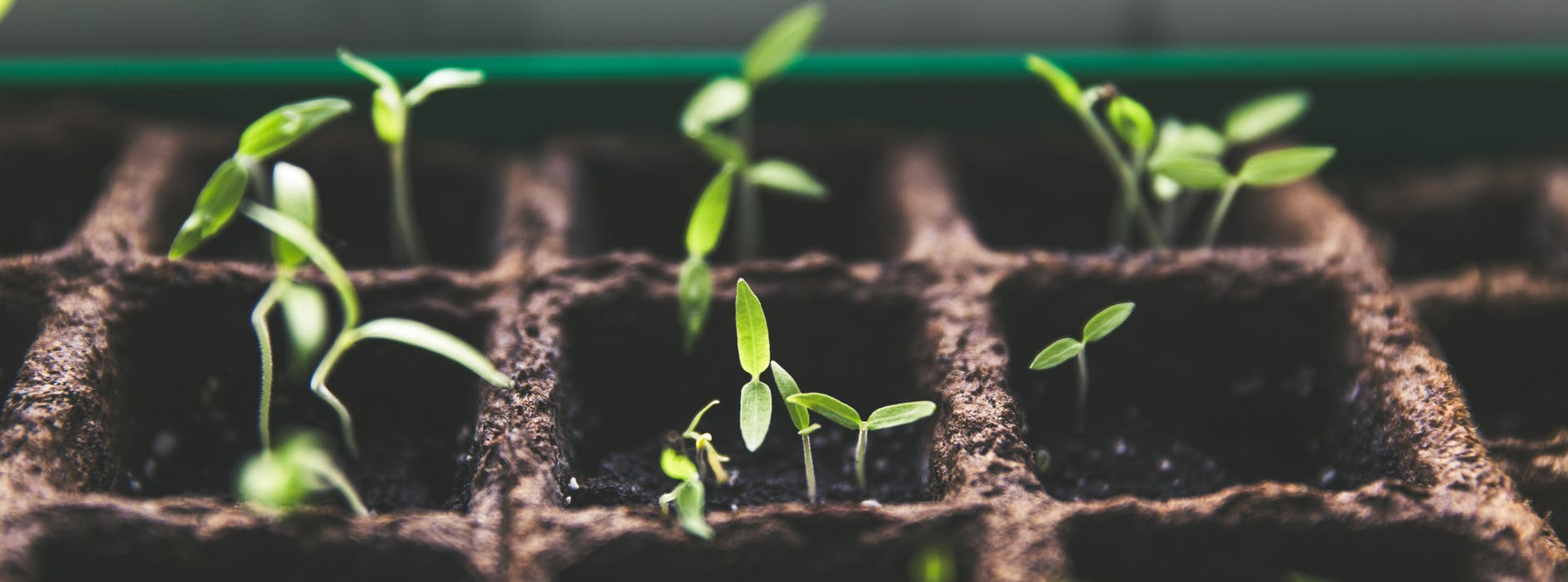
Would you like to continue our journey together into a greater understanding of how to compost your fears and turn them into fertile soil to enrich your life?

Note: This Post is a continuation of my post, How to Compost Your Fears, part one from January 16, 2022. If you haven’t had a chance to read it yet, you may want to do so before moving ahead with this post.

So, it’s been four days and it’s time to find out what’s happened to the fears we placed inside our composting containers. I’m curious about what sort of breakdown and changes have been happening while we’ve been away having a good time.

I imagine that your contents and mine may appear very different. Since the only contents I can see are my own, I’ll describe them, and you can see if some of the same things happened to yours.

Before I do, I have to admit that I have some preconceived notions about fear. My sense has been that fears intention is to take something away from me. To somehow make me less, which can create a good deal of anxiety. Over time, I’ve come to a new realization, that this is not the only way to view the role of fear. I’ve discovered it’s possible to shift my attitude and see fear as a divine messenger whose intention is to give something to me to help guide me toward my best life.

A second concern about fear centers around my perceived inability to control outcomes. Ordinarily I want things to turn out a certain way and consider any other result to be unsatisfactory. This generates a tendency toward worst case scenarios and a fear of failure. At times my awareness kicks in and I recognize this isn’t what I really think, but what others have told me, which creates incentive on my part to shift and change directions.

Okay, back to my compost container. When I pried off the lid and peered inside, I discovered the contents had separated into layers, with the lighter pieces (not seeing smiles or being able to hug others, appearing foolish and feeling small) on top and the denser pieces (feeling unsafe, unworthy and a failure) on the bottom.

I realized that not all fears have the same effect on me but that it is still essential to acknowledge each one and be open to its message, rather than ignore them or pretend they don’t exist. I found that each fear offers its own insight and as I embrace it the fear I once experienced is released.

Maybe you are like me and need examples to make sense of the world.

Here is one of the dense fears I experience fairly often. The fear of being unworthy or unloved. I’m not saying it is based on any reality, but that’s one of fears hallmarks, because it only has to appear real to be a problem.

When this happens to me now, I try to come to a full stop and acknowledge the fear I’m feeling and remind myself that I have the power to take action. I have free will and can make any choice I claim. I can find a great self-help book, talk with a friend or counselor or, as I usually do, have a conversation with god.

Whichever I choose, my aim is to shift my level of awareness and recognize the deeper truth that my sense of feeling unworthy or unloved results from seeing myself as separate from god and others. Nothing could be further from the truth.

I’ve come to believe that fear lies underneath all things and shows through every time I need to be reminded of the truth, that I am a part of the divine and connected to everyone else here on earth and that I am loved and cared for and that there is always an answer available to me.

I remind myself that avoidance of fear is not the answer and that although it may seem counterintuitive, opening myself to fear and embracing its message enlightens me and robs fear of its power over me.

No matter what your contents look like or how they feel, know that you have the innate ability to release any of your fears and discover the divine message(s) they came to bring you.