Rules

Do you always follow the rules? Do you know anyone who does? Do they have to make sense to you before they feel worth following?

It’s a fascinating thing to me that when I pulled up my Word application to begin typing this post, a screen popped up that indicated that Word would automatically be checking my spelling and grammar.

Should I take that as a sign that Word doesn’t believe I can spell or use proper grammar? Maybe it’s noticed that upon occasion I make mistakes and wants to help me out. Or maybe, Word believes everyone needs support.

One other way to view this is that Word feels I need help following the rules.

I wonder, what if I don’t care about Word’s rules? Will Word allow me to write what I want without changing it? Is there a place within the application where I can check a box that says, “no thank you”?

I’m probably overthinking this, but there is something within this simple action that sparks something in me. Some reminder no doubt, from an early English class.

I distinctly remember learning some rules about grammar, sentence structure, vocabulary, and pronunciation in seventh grade. Occasionally my mom would help me with my homework. She was very interested in this whole subject and if I used an incorrect word or pronounced it wrong, she would tell me about it.

Given the nature of the English language there are so many rules and exceptions to the rules I wonder if anyone even knows them all? Or cares to know them.

I find it a curious thing that there are rules about what words are allowed to be included in a dictionary. What path do hopeful words have to take?

According to one internet source the folks who get to decide (called lexicographers) usually expect three criteria to be met. They want to see that the word has become widespread, has an agreed-upon meaning and has been used for a long period of time. Once they feel confident about this, they include it in an updated version of the dictionary. (Ain’t that great)

Many people don’t care to wait for this lengthy process, and would rather the new word appear immediately, so they add it to an Urban Dictionary. They kind of jump the gun on the whole formal process. Maybe they don’t like all of the rules either.

Now, I do realize there need to be rules for there to be an orderly society. I understand that most are critical to a smooth-running world, but I wonder about the exceptions.

Are each of us allowed to use our own commonsense to decide which rules to follow or would that constitute a breakdown in the process?

Have you ever wondered if we follow the rules to stay out of trouble or because they make sense to us? And what are we supposed to do when the rules create injustice? What if they are only in place to favor certain people?

I suppose the first answer is, we can attempt to change them so that they are fair and equitable for everyone. I am in awe of those who stand on the front lines in this endeavor. Those who care about others and take actions to help and support them, especially when the rules need to change.

They are true heroes in my mind, and I want to aid them in their quest. I am not as interested in being a rule breaker as I am in being a rule changer. It seems to me there is room for growth here and I hope I am a part of the answer, not another part of the problem.

Speaking Your Truth

If someone asked you what speaking your truth means to you, what would you say?

Some might say that it means being honest with others about how you feel and what you think. Or it could mean expressing yourself in a way that mirrors your inner thoughts and ideas clearly, so that another understands your position about something.

It might also mean taking a stand about something truly important to you. And maybe even more critically, taking action to ensure others know how dedicated you are to whatever cause or concern you support.

When I was thinking about what I consider to be my answer, I reflected on a number of obstacles that get in my way making it difficult to speak my truth. Perhaps you’ve encountered some of them as well.

In my ordinary day to day life, it is often challenging to separate out what is most important to me from the host of tasks I feel I need to complete on any given day. Some of the mundane chores seem to take up so much time that it feels like I run out of time. I’m sure this is not really the case, but it feels like it to me and I recognize my perceptions rule my life.

Another, and very different issue, is that I can initially become quite concerned about what others think about what I say (speaking my truth) and either disagree with me or disregard me. I realize I have no control over their reactions, nor do I really want any, and that it is wise to release any vested interest in their opinions, but a human part of me is tempted anyway.

An additional obstacle is that I don’t always fully know what my truth is. I may have picked up on hints or formed parts of what feels like the truth to me, but it’s not always completely formed or not clear enough for me to see it or speak it.

Courage is yet another challenge in speaking my truth. I suspect I am not the only one who fears not being accepted by others, even while knowing I’ll probably never have enough insight to truly know what they think or feel.

Beyond that, speaking my truth is ultimately not about being accepted by others, having them agree with my views or supporting me in any tangible ways.

Speaking my truth (or you speaking yours) is about exploring and discovering what lies inside you, in your heart and in your spirit. And once revealed, allowing it to grow and flourish, so that it can be shared with the world.

And believe me, it’s there for that very purpose.

I feel strongly that each of us has within us parts of the whole. We share a connection to the one, the divine, where everything is known. Speaking our truth out loud encourages those around us to do the same. We all learn from each other. We all can invite each other into our inner worlds and thrive together.

At one point in my life, a few years ago, I made a conscious decision to speak my truth, both inside and outside of me.

Inside of me, I chose to spend solitary time talking with (god), as I’ve mentioned several times in these posts and to journal and meditate and walk, contemplating what I believe or know to be true for me.

Springing from this deep source, I’ve come to the conclusion that what is important to me to be shared is what I feel the truth is about life. To speak out loud so that others may hear my words, not to convince or sway, but to invite them to consider if there is any value for them in what I choose to say.

Speaking my truth then becomes a witness of what I perceive about the nature of things, in an effort to share my depth with other’s depth, and in that sharing we all become a part of the one.

Winning

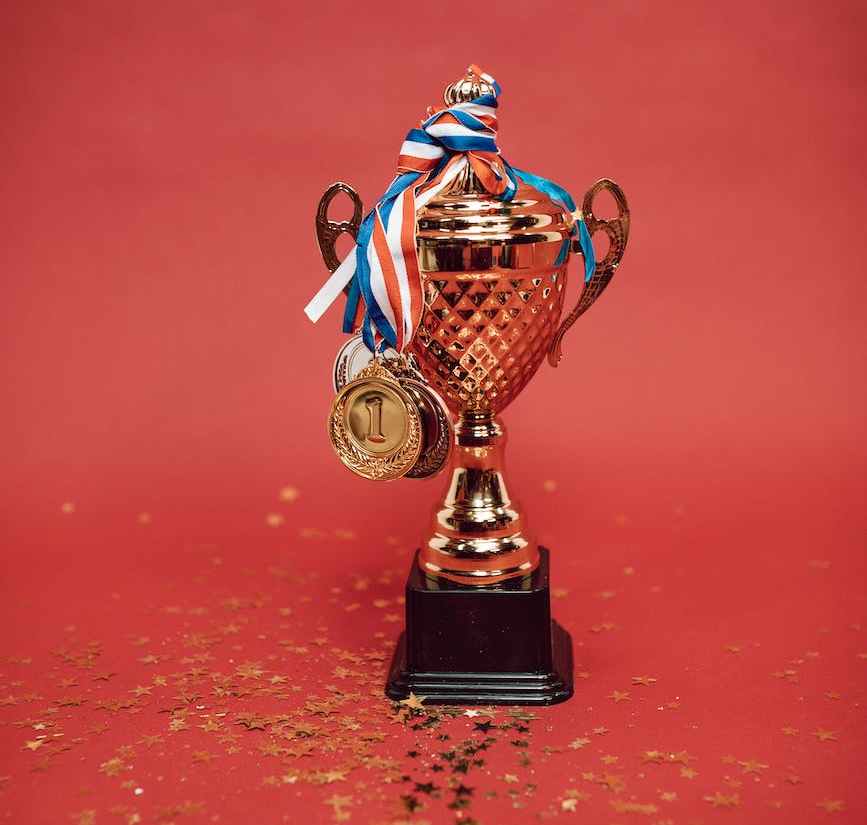
What if there was no such thing as winning? Can you even imagine it?

How would anyone be able to establish who was the best at anything if there were no outright winner?

What would happen to all of the championships, the rings, medals, awards, belts, trophies? Wouldn’t they become meaningless?

This thought came to me one day and it intrigued me. I wondered what the upsides and downsides would be, ignoring for a moment that it was unlikely that others would accept it as a practical idea.

They might also be afraid that in addition to giving up the idea of winning, the concept could extend to grades, evaluations, promotions, and all sorts of other endeavors that appeared to be desired.

But I needed to sit with this because it felt like there was something important behind the scenes that was worth considering, even if just for myself.

I wondered what could be wrong with casting out the idea of winning and the flip side, losing. Who would it hurt?

I thought back to instances where I won something, a game, a contest, an award, a promotion. What did they mean to me?

In the moment, something about them felt good. They added to my sense of self-worth. I believed they altered others impressions of me for the better. Some of them increased my bank account or furthered my career. So, what could be bad about them?

Does it hurt others to have lost? Could it be said that if they tried harder, they could have been the winner? Could have taken the prize from me?

It occurred to me that there might be a handful or a thousand contestants, all trying their best to win and only one individual or team would end up in the winner’s circle. Does that seem fair?

How do all of those who lost feel?

Part of me had a very strong reaction to all of this. It’s the part that wanted to explore this idea. Its voice rose higher and higher until it had my whole attention. I had to ask, was any part of this ‘sour grapes’, the sensation that comes when you can’t have something, and you have a bad attitude about it.

The fact is you can’t always win at everything. Sometimes everyone loses unless they never compete at all.

When I finally reached this sentence it all became clear. What if life and all of the events we experience were not competitions, ways to rank order things, to establish winners and losers?

What if instead, life was collaborative? What if folks worked together? What would happen then? The part of me that started this whole thing sat up and took notice of this idea.

But another part of me joined in and pointed out that human nature always has an element of competition involved. That some amount of it is in everyone…how they look, how smart they are, how much money they have….and on, and on.

Where was this inner conversation going to go now? Was there some middle ground?

A new thought sprung up and a question formed.

What if it’s not about winning and losing itself but about what each of them mean to us? Is there a way to have a game, a contest, an evaluation, where the idea is to raise everyone up? To find ways to encourage, congratulate, reward, assist, appreciate, and acknowledge everyone’s innate value as a human being?

I’d like to think so. I’d like to incorporate this idea into my life and help others do the same. I’d like to think that winning and losing are not the point and that valuing everyone and the contributions they are capable of making is the point. I’m going to try to shift my mindset about this and see what happens.

When Kindness Comes From Joy

Have you ever wondered where kindness comes from? Is it innately inside each one of us or does something need to happen before it appears?

It feels to me that we operate with different definitions and ideas about kindness.

I say this because I recently heard someone suggest that ‘we should be kinder than necessary’. While I appreciate the idea that kindness is important, two things about this statement challenge me.

The first is the use of the word ‘should’. Personally, I’ve gone to great lengths to eliminate this word from my vocabulary, because it is a ‘shaming’ word, meant to enforce one person’s opinion on another.

I wonder if you react the same way that I do when ‘should’ is used. I am immediately suspicious of the motivation of the one using it. Why do they think I ‘should’?

The second concern I have about this statement is the word ‘necessary’. I have a difficult time reconciling the use of the words kindness and necessary in the same sentence. The implication being that there is some sort of requirement or obligation involved with kindness. That isn’t how I conceive of kindness.

I went looking for references to kindness and found one that seemed to mesh with my understanding. It suggested that it is any selfless act of caring or compassion and can easily be recognized in both our own or others large and small actions.

I wondered how often kindness flows to me and through me. I paused for a few minutes to see what would come.

If you sat back right now for a moment or two, what do you think would come to you?

Two events jumped to the head of the line for me. In each instance they were infused with joy, not only for the receiver, but also for the giver. And it seemed to me that joy was the real source for the acts of kindness. I recognized a deliberateness to the actions, a meaningful opening to spirit and a flowing from abundance, as if kindness was an endless source.

I’d like to share mine with you in the hopes that you see some of your own and let them wrap you up in a feeling of joy.

The first one happened a few weeks ago while I was at a workshop at Kripalu Retreat Center in Lenox, Massachusetts. After classes were over for the day our group decided to get together in the evening for a kind of impromptu ‘talent show’. One of my friends, whom I’d met six years earlier at the same workshop, stood up and mesmerized the group with her divine performance poetry reading. We sat spellbound. I could not believe the incredible growth in my friend and went over to her; hugged her and told her I was so proud of her. Some might view this as an act of kindness, but she and I knew it was more than that because it came from a deep well of joy we share.

A few days later I received an email from her with an attached video of her reading a poem she wrote just for me. I was touched to my very core and a kindness born of joy was returned to me.

The second event happened a few days ago, while my wife and I were on a day trip together. We stopped at a restaurant my parents loved to visit and sat down at an empty table. Our waitress came over and engaged us in a conversation and asked if she could get us something to drink. When she returned, she inquired if we were ready to order. She took my wife’s order and turned to me. I said I’d like to start with a piece of their coconut cream pie (knowing that they sometimes run out of it). She told me she liked the way I ordered the best first and from there we had an extremely pleasant exchange throughout the meal.

After our meal was over and she came to our table with our bill, I told her that I was awarding her my ‘best waitstaff of the year award’. She absolutely beamed with pleasure and told me I’d made her whole day…maybe her whole week, as she went to help the next customer.

I took the paper ring that encircled my napkin and silverware and made it into a small award certificate for her and gave her a tip that matched our bill total. I handed everything to her, and my wife and I started walking out. She ran after us and called out to me, that she was going to keep the certificate forever and that I’d made her whole year!

There was such joy in her voice, and I knew that my simple act of kindness came from joy and reached out to create more joy.

Each of these things are important to me because they represent a connection to our divine source, where joy and love exist in abundance.

A Visit From Sadness

How often would you say you feel sad?

I know that there are specific times and events where sadness can be quite intense, but I’m asking about the smaller versions, the ones where we seem to fall into a state of temporary sadness.

As humans, I believe we all realize our lives are going to be made up of many different feelings, some we welcome and others we hope will never arrive.

Recently I had an encounter with sadness. There was a faint sense of it and then wham, sadness seemed to ooze in from every direction.

I was away from home and although I was in a place of my own choosing, I still had an overwhelming sense of sadness overtake me. And it reminded me of other times when sadness came to me and was accompanied by its friend, loneliness.

My first reaction, as it usually is, was to try to push it away, hoping that by sheer force of will, it would move on. I was afraid of feeling it and unsure how deep it would travel inside of me. After all, why would I want to feel sad? Why would I want to get dragged down, unsure of when the sadness would let go?

Something about how I felt was different though. At first, I couldn’t put my finger on it. I tried and all I could come up with was that it felt ‘lighter’.

As I’ve mentioned in prior posts, I’ve spent a great deal of time exploring my feelings. Part of that process is focused on allowing them in and being open to what they have to share with me. That may sound a little unusual, but it’s something that has been very helpful for me.

So, when this sadness arrived, I coached myself not to panic, but rather to stay open to it, and in the opening, to see if I could listen to what the sadness might share with me.

I softened my normally apprehensive self and leaned into it, allowing the sadness to enter me. What I discovered was that it didn’t really want to stay long. It just wanted to let me know it’s okay to spend time together every once in a while. And, after a short time, it stood up and waved goodbye and wished me a good day.

This whole exchange fascinated me. Here I was worried that sadness had decided to move in permanently and all it really wanted to do was come for a quick visit.

Sadness, like every other feeling, comes and goes.

What occurred to me later was that I am the one largely responsible for its length of stay. Every time I resist it or try futilely to push it away, it gains a certain amount of strength so that when it finally does arrive, its’ power is far greater.

It also occurred to me that many other feelings follow this same curve. They arrive asking for me to pay attention to see if there is a useful message attached.

In this case, sadness came and went, a fleeting feeling. It opened me up and I realized I would survive its stay. I would move on and after a bit, be happy again. I think it’s this way with all of our emotions and feelings. They don’t have to be permanent. They can just be visitors, filling past, on their way to somewhere else.

It’s up to each of us to decide how long we wish to keep them.

So, I decided to wave back as sadness left me and accept its offer to have a good day.

The Power of Choice

Do you believe that you have a choice?

Not everyone does believe this. They maintain that they are limited and although they may at times have a choice, they don’t always. They believe that there are defined limits that cannot be exceeded.

I wanted to know where I stood on this question, so I began exploring this idea of choice. I wondered how far I might be able to go with my ability to make choices.

Could I for instance, decide in advance, how something could or would turn out?

One thing I discovered early in this process was that if internal fears were present, I felt very limited. I found that fear very effectively blocked my way forward. It didn’t matter which fear was present, they all seemed to have the same effect.

I also encountered an interesting dimension to fear. It has an amazing ability to alter reason. Despite the presence of facts, fear has the uncanny ability to sidestep them and create projected outcomes, some of which don’t even make sense, but appear very believable.

I wondered how do I, how does anyone move beyond this, once fear is present?

A voice appears inside me offering an answer. As usual, it is Lia’s voice (an ethereal feminine voice of god that comes to me whenever I have questions I’d like answered).

She offers this simple solution, “You just decide. That’s what you are always doing. You make a choice and then take action steps.”

Sounds easy enough. But then it occurs to me that there are many different kinds of choices, and they feel different to me, making me wonder if her solution applies across the board.

There are subconscious choices (my default choices), conscious choices (that I make either proactively or reactively), spontaneous choices (made immediately in the moment) and, at least for me, spiritual blueprint choices (ones I just ‘know’ are a part of my path).

Lia reacts saying, “As you explore the world of choices, it is helpful to keep in mind that nothing happens TO you. You are not the victim in any experience. All things that happen, happen THROUGH you. Everything is a part of your spiritual blueprint (those events you came to earth to experience), and each serves you, either directly (moving you forward) or indirectly (pointing your way forward by sharing that they are not the way).”

That statement was going to take me a minute to absorb.

I ended up telling Lia that I could use some additional clarification, so she went on to say, “There is a wealth of possible choices, and they exist inside your mind. Some of these you view as threats. You extrapolate these threats (fears) and create ideas in your mind which you ‘believe’ are true, but they are just ideas (thoughts), and you have the choice whether to believe them or not. No thought has any true independent power. They receive their power only if you choose to believe them. Without this power they are empty.”

This all made sense to me, especially as I brought to mind some of the idiotic fears I’ve created over the years.

Her wisdom continued, “Rather than focus on your thoughts created by your fears, it will benefit you richly to realize that you have other choices you can make, ones that do serve you.”

She went on to encourage me to find a way of shifting.

Here’s what I came up with. “I release any choice I do not wish to experience and embrace (choose) those I do wish to experience. I acknowledge my perfect freedom to do this now and at all times.”

Letting go of my fear thoughts allows me to shift and choose thoughts that directly serve me, ones that bring love and joy into my life. It’s a constant kind of thing, but I now feel equipped to make good choices and experience life in a positive way.

Heaven on Earth (Part Two)

Hopefully you’ve had a chance to read Part One of this post about heaven on earth. If not, please check it out, as it will make this post more meaningful.

This is a continuation of an assignment I gave myself several years ago where the challenge was to create my best version of life here. In essence, to offer myself and the world an opportunity to come together, connecting and sharing our lives, in the hope that we could join forces and find a way to live a life of love.

Here is part two of my Heaven on Earth assignment:

(picking up from where I left off with ‘forgiveness’)

And

We would find that “community” happens naturally when we touch, hug, care, love and forgive each other- and that once we build community there will always be support for all of us- no one would ever have to feel alone or separate, that there would always be someone to help, to comfort, to teach, to encourage our dream, to reward our contribution, to love us.

And

There would be abundant and gentle humor, not filled with anger, envy or harm- a kind of humor that includes, rather than excludes- a kind of humor that joins us in laughter and connection- a kind of humor that increases joy.

And

There would be creativity of all kinds; art, music, writing, building- and everyone would be encouraged to participate, no matter what their skill level was, because creativity is individual and it would grow in a loving environment- where imagination would be given life and seen as an extension of heaven to be appreciated- a place where you could lose yourself in abandon.

And

It would be a place of “potential peace”, sometimes utterly peaceful where everything is at joyful rest; balanced, centered, open, deliriously right and when the world turns to chaos, fear, anger, worry and hurt, there would exist an awareness that peace is still possible, and people would see those in pain and come to their aid, to listen, to hold them, to help them release their fears, to touch their spirit and show their love and in this act, provide balance for both giver and receiver- a kind of sacred harmony.

And

There would be a feeling of freedom within each of us, a certain knowing that we are loved, wholly and completely by the divine- so that there would always be a center of hope within us, a light that cannot be extinguished, a flame that kindles our own love and that connects us to everyone else, our sacred family- so that joy is always present. (the end)

So, sit back for a moment or two and see how this strikes you.

Is it at all realistic? In your opinion, could it ever happen?

I confess that despite how much I wish that things could be this way, I have my doubts. Mostly, this is because each of us has received the precious gift of ‘free will’, the ability to decide for ourselves what beliefs we will hold and choose what actions we will take in the world. It seems too difficult for me to believe that every person would sacrifice their own ability to choose, regardless of how much it might benefit everyone in the process.

From what I’ve seen during my life, there are always those who will take from others. Their need or desire is so great, and their rationalizations are so strong that they feel it is right for them to enhance themselves, even at the expense of others.

If I’m entirely honest, could I say I haven’t done this myself?

This question forces me to consider my own nature, which is not an easy thing to do, once you’ve come up with a beautiful plan for creating heaven on earth.

So, where do I go from here?

As with absolutely every decision in my life, my choices create my experience. I feel it necessary to ask myself, what is the most important experience for ME? I guess this may be the same question you’d need to ask yourself.

When I feel connected to the divine, love is my choice, and it is this I hope to always choose.

Conversations with Past and Future Selves

Would you like an opportunity to speak with yourself, either from the past or the future? To have things revealed to you, to make your life easier or to offer you a chance to avoid pitfalls.

That’s the question that came to me recently.

The event that created this was the purchase of a new bed for our upstairs bedroom. In order to make space I needed to relocate all the storage bins I’d shoved under the old bed. I’d really packed them in and basically only had a vague idea what they contained.

I made myself a promise to sort through every bin and make decisions regarding what was worth keeping and what needed to be thrown away.

My discoveries were very enlightening. There were all sorts of interesting things covering several different time periods in my life, some from college, some from my early working years and a few things that were more recent.

I found a lot of journals I’d written and decided to leaf through a few. I was struck by the life events that concerned me at the time I wrote them, some of which remain with me today, while others have long since been resolved.

A question popped up.

I wondered how my life would have changed if the ‘current me’ could go back and have a conversation with the ‘past me’. What could I have learned? And would I have listened and changed course?

I’m not sure.

Some part of me believes I wouldn’t have paid attention, and gone ahead and made the same decisions, despite the sound advice I received.

I don’t know about that either.

What would you have done; listened or ignored your ‘future self’? It’s an interesting question to kick around. Certainly, I’d have liked to avoid many of the problems in my life and taken an easier route.

But would I really?

The reason I ask is, would I still be the same person that I am today if I’d made different choices? And if I had, what would the consequences have been? Suppose the advice given me by my ‘future self’ altered the decisions I made that led me to a new friend, or a better job, or a wise investment?

How can anyone know the right path to take so that they experience the outcomes they most desire?

Something twisted during my musing about this.

I wondered, what would my life be like if the ‘current me’ could talk with the ‘future me’?

What if that were possible? What questions would I ask?

A few came to me quickly. How long will I live? Will I lose those closest to me? What will my day-to-day life be like? Will the New York Giants ever win another Super Bowl?

I sat with all of these questions and more for a while before deciding that I don’t really want to know.

I think it would spoil the surprise. And I think it would change every moment of my ‘current life’ because I’d be thinking about the ‘future me’.

I also think my life would lose its spontaneity, its spark, and its sparkle.

So, despite how much I might learn, I would choose just to wave to my ‘past’ and ‘future’ selves from a distance and go on about living my ‘current’ life.

We can still be friends, but for now, I choose to live in my present moment.

Heading Into The Storm

It seems human nature to try to avoid challenging situations in life, almost like we’re hard-wired that way. Perhaps some internal awareness is operating, attempting to save us from having to deal with things we wished were not a part of our life.

When a difficulty presents itself to you, what are you inclined to do? Do you shy away or pretend it’s not real or solicit for help from others? Or do you face it, recognizing it’s unlikely to be resolved without your direct intervention?

There are of course lots of other strategies, but most seem to come with potentially uncomfortable consequences.

You may be thinking this very moment about something you’re facing and wondering how to proceed. Or you may want to arm yourself with a new approach for when the time comes for your next challenge.

You might already know that I am a writer. Afterall, you are reading something I’ve written right now. But I write more than these posts. I am wholly engaged in a series of books that all go by the title of Little Buddha, and I’ve just completed Book Four. In it there is a story about a young man, Max, who worked in the western part of the America doing an internship with the US Forestry Service. This gave him the opportunity to observe nature and experience her wisdom.

Although he learned many things from the Forestry workers, a Native American by the name of Black Elk, was the one who taught him the ways of nature and filled him with a living wisdom he could carry with him. More than this even, Black Elk taught Max how to observe and understand life for himself. Certainly, a most precious gift.

Perhaps the most valuable teaching of all came one day when Max was observing a herd of buffalo and watched as a massive snowstorm swept toward them. He paid as careful attention as he could, trying to see what each of them would do. In the chaos and blinding snow too much happened for him to notice it all. He wanted to understand better, so he asked Black Elk to share his wisdom.

Black Elk, whose normal approach was to teach through asking questions, decided to explain through the use of his own observations.

This is the story he told Max.

“Many, many years ago there was a Sacred Buffalo. All the other buffalo watched the Sacred Buffalo and followed the Sacred Buffalo everywhere it went, always finding enough to eat. One day, a great storm arrived. Many buffalo turned away from the storm, charging as fast as they could, trying to outrun it. Others watched to see what the Sacred Buffalo would do. The Sacred Buffalo snorted and stamped its great hooves upon the earth. Then, giving one great cry, it glanced at the herd and ran full speed into the storm, disappearing in a wall of white snow. All the other buffalo followed stampeding behind where the Sacred Buffalo had disappeared into the whiteness. A short time later all the buffalo emerged from the storm into a place of stillness and there, grazing peacefully, stood the Sacred Buffalo.”

After some more discussion Max came to understand the value of heading into the storm. He accepted and embraced the story and shifted his life, recognizing the wisdom of the Sacred Buffalo.

In my own life, I’ve seen that trying to avoid or run away from my problems has caused an enormous amount of pain and suffering for me. I’ve allowed all those scary, fearful, difficult decisions that have come to visit me too much reign over me.

The essence of Max and Black Elk’s story enlightens me. Opening myself and allowing courage to come forth, then acting swiftly and boldly, heading directly into the storm of any problem, I now see as the wisest path forward. It shortens the length of the storm and leads me into a place of peace.

In the story Black Elk gives Max a carved wooden buffalo that had been bleached white by the sun as a reminder for his travels through life.

My hope is that I remember the teaching of this story.

Should you wish to read more of the story, you can order a copy of the book, Little Buddha Book Four by Rob H. Geyer, on Amazon in either print or ebook format.

Choosing Your Memories

If someone asked you to share one of your memories, what would you choose to tell them?

Now imagine the same person asked you to share five or ten or fifty, how many of them would be ‘good’ memories?

If you were given a day or two to conjure up as many memories as you possibly could, how long would it take before you mentioned a ‘bad’ memory?

It fascinates me to consider what my answers to these questions would be. It feels like some sort of subtle test, a way to measure my satisfaction with my life.

I had an occasion recently to investigate this idea up close and personal. As my mom’s power of attorney, it was up to me to sign all the mortgage closing documents on her recent house sale.

I’d promised myself that I would walk through the house before the closing. I wanted a chance to capture the living memories I felt were stored there. I wanted to sweep them up and bring them with me. To store them somewhere safe inside me so that I could hold them, perhaps forever.

As I walked in the front door, the floodgates opened. I can’t recall the very first time I entered the home I grew up in and I that I have been a part of for over sixty years, but so many things stood there in front of me.

The house has so many interesting features and every inch of space is utilized. There is a shelf inset into the wall in the foyer. One of the shelves used to hold a small wooden ship I carved for my father. It had toothpick masts and thread rigging and it took me a long time to build. It’s not there anymore. I have no idea where it went.

I walked into the living room. A place where so many joyous family gatherings were held. A place where a mounted deer head rested above the fireplace. I’d bought it at a garage sale for 25 cents. I thought it was a great deal. I’m willing to bet the seller and his wife thought they’d made a profit. The deer head is gone now. I have no idea where it went.

On into the dining room, where all our family dinners happened. My mom was an excellent cook and I remembered many of the meals we ate there. If I stretched a bit, I could almost taste them. It became my mom’s reluctant bedroom, when it wasn’t safe for her to go up and down the stairs any longer.

Going from room to room brought more and more sweet memories. Words, sounds, feelings. The comings and goings of six decades. All the games, conversations, fears, hopes, and dreams. All the wonderful cookies after school, fresh out of my mom’s oven. The mad crazy ping pong games with my father in the basement, which was too short for our smashing forehands. All the imaginative games with my sister, one of which was pretending to be radio disc jockeys under the dining room table. Don’t ask me why that was our station headquarters. It just was.

Upstairs I walked down the hall to my bedroom. I could still see it as it was when I was a child, the placement of my desk and chair and bed, the Hopi Indian wall hanging, even the closet that had a sort of secret compartment where I stored my prized possessions.

My memory lane is long. The savoring, both touching and sweet.

Perhaps you’ve lived and lost some parts of you, a house, a family member, friend, favored pet or a lessening of your skills and senses. It happens.

What I think matters most to me is what I do with my memories.

Do I let the ‘bad’ ones overtake me, bringing me down and crushing me into silence and grief?

Or do I sift through them until all that are left are the golden, glowing, shiny memories. The ones I wish to keep and hold near to me.

The beautiful thing is, we each get to choose.