Different Skin Daily

The other day I was struck by a thought. I let the thought pull me toward itself without resistance, despite not clearly knowing its full impact.

I waited a moment for better clarity and there it was in the form of a question.

What if tomorrow I woke up with different skin?

It might be a different color or a different texture. It might be old wrinkly skin, or the smooth pinkish skin of a new baby. It might be that of a burn victim, or a leper or a model’s perfect air brushed skin.

It could be I open my eyes and see myself as black or white or brown or red or yellow or some shade in between. What if it was possible to wake up with green or blue or purple skin?

The idea twisted a bit, and the question became, what if I woke up every day with different skin? Would that change my outlook on life?

Would I become more tolerant and open-minded, or would it move me in another direction, one where I played favorites, treating one skin color better than another?

I wondered whether changing my skin every day would be enough time to form any lasting opinions or would I need more time, like a week or a month or maybe a year.

I also wondered whether I would like some skins and dislike others. If I constantly changed, would that provide me with a broader sense of feelings that would create genuine compassion.

If I changed skins daily, would I have any control over the next one to arrive? Would there be ones I would try to avoid?

These questions generated a great deal of contemplation.

Why did this question appear inside of me? Is there a message attached that I need to listen to? If there is, what does the message mean to me?

I asked myself, how many skin types are there? Would this constant changing go on for as long as I lived? If so, could I stand it, adjust to it, learn from it?

In this present moment it feels quite daunting to consider, so I sat back, closed my eyes, and slowed my breathing, hoping to gain some valuable perspective.

An impression appeared.

I sensed that whatever skin covered my body was not the issue. The issue was how I felt about it and what thoughts passed through my mind. Because I’ve already lived a long life, I have absorbed biases through my cultural training. Assuredly, many of these biases are not real and not based on facts. And yet, they exist inside of me.

Based on the idea of ever-changing skin, my focus sharpened, and it set me back on my heels. I immediately realized how easy it was for me to judge each skin and to choose an attitude to go along with each one.

I needed to take a step back…a big step back.

Some part of me searched for a sense of fairness and compassion. I sensed a desire to love each and every skin I wear. I began to look beneath the skin, to where every one of us is the same. A divine being, living an earth life, creating, and experiencing what it means to be human.

This skin experiment has offered me an opportunity to see to a greater depth and deepen my love for all beings, regardless of how they appear.
Was Buddha Worried About His Weight

I’ve only done this once before during the 2 ½ years I’ve been posting, but I want to repeat this post because it’s the most popular one to date. It seems important somehow to me to put this back out there…so, here it is.

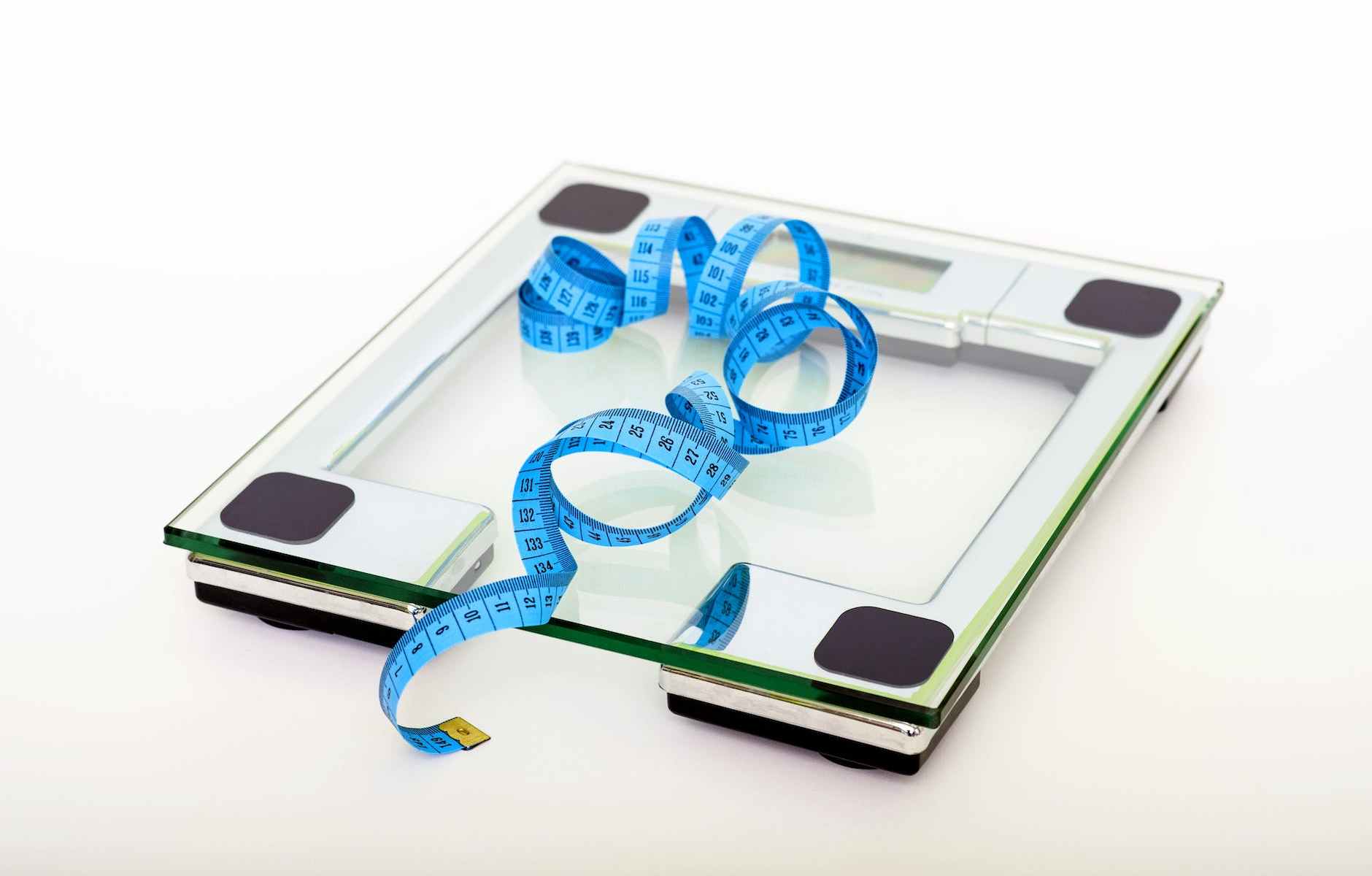
One day I was wondering about all of the diets there are around, so I decided to investigate a little. A quick search of the internet produced thirty-nine diets, identifying their strong and weak points.

It was mind boggling.

How could anyone ever hope to understand all of the differences between them and conclude which would be the best to try, if in fact, you wanted to try one at all?

The specifics of each diet change depending on the emphasis of the plan. Many diets support the idea of increasing fruit, vegetables, fish and plant-based foods. Others capitalize on certain foods groups to counter physical conditions like, high blood pressure, diabetes, cardio concerns or to improve mental functioning. In all the cases I read about, nutrition and safety play a major role, but there seems to be a significant difference of opinion, depending on the expert who is providing the information.

Some diets are notoriously difficult to follow, while others make it too challenging to understand the differences between good and bad food items or some other key components.

In many cases there are supporting statements made to attempt to convince a potential dieter of the values or reasons for the individual plans. For instance, some report that the Paleo Diet says, “that if cavemen didn’t eat it, you probably shouldn’t either.”

It wasn’t until my mid 60’s that I felt the need for a diet. A gradual increase in my weight each year suggested I would be in trouble if I didn’t make some immediate changes.

So, off I went to Weight Watchers.

Their program stresses adherence to certain point goals (each food is assigned a point value) and highly recommends attendance at weekly meetings, to monitor weight and participate in conversations with other members, guided by an instructor.

I did, in fact, reach my goal and have been mostly successful in maintaining it, within a reasonable range.

What all of the instructors say is, that to be truly successful, you have to change your mind-set about your relationship with food. Merely altering what you eat for a short time, even though it might produce some results, will fail in the long run.

I believe they are correct.

I believe there is a lot more involved that allows a person to achieve their weight goals. Or, for that matter, any goals they might have.

This is where Buddha comes in.

Have you ever seen a picture of a slender, trim Buddha? I doubt it. Do you think Buddha spent any time concerned about his weight? I also doubt this.

Bear in mind here (BIG DISCLAIMER), I am not suggesting or recommending that you ignore the sound advice from your health professionals regarding any diet ideas they have, especially, if you have an obvious health concern.

What I do want to share is a thought about our ‘beliefs’, especially in relation to what we experience in life.

Considering all dieters, could the difference between those who are successful and those who are not, be their belief about the outcome they would experience, rather than the particular diet they were on?

If you substituted a different concept for dieting (academic, career, relationship, finances…), would it work the same way, meaning your outcome would be directly related to your belief about your outcome, rather than one of the individual steps you took?

It certainly feels to me like an important idea to consider, mostly because it alters the dynamic, shifting it from a conceptual form to one of belief, particularly if the belief is deep seated.

This idea is creating a shift in my mind-set about my food intake and maintaining my weight. What if I had a strong belief that it is not so much about what I eat, as it is about what I believe about what I eat?

That’s something I think Buddha would have something to say about.

Anger

I was sitting at my desk giving myself permission to follow any thought that came into my mind. I wasn’t reaching for a specific destination, just kind of waiting to see what would show up.

An image appeared. It was an old-fashioned typewriter, perhaps a Remington. For those unfamiliar with these, allow me to explain briefly. You have to insert a piece of paper, threading it carefully so that when you turn a knob, it the paper into view. Each time you hit the return arm, it advances the paper and returns its position to the far left. There are several rows of individual buttons with letters, numbers or characters and you have to depress them to print on the paper. As you depress a button a long metal arm raises up and strikes an inked cloth ribbon, which makes an impression on the piece of paper.

Using this kind of typewriter is more of an art than a science. If you happen to hit multiple buttons at the same time, the striker arms will lock together, forcing you to separate them and start over.

If you hit a wrong button, you have to correct your mistake, which would mean inserting a piece of ‘correct tape’ over the mistake and hitting the same button again to make the page white, ready for the correct letter.

Believe me, it was maddening if you were only a marginally capable typist like me. I remember needing quite a bit of correct type to fix my errors.

Recalling this, I discovered I was still in touch with how angry it sometimes made me.

The next image that came to me was somewhat bizarre. I imagined hitting a series of different buttons. Each time I hit a letter, I sensed a whole word appear and felt its depth.

H…helpless, F…frustrated, A…afraid, V…vulnerable, B…blamed, I…inconsiderate, D…danger.

What was happening? It took a moment to realize there was a pattern here. Each of these words represented a source of anger for me. I sat back to consider and saw more letters appear. I…insecure, O…oppressed, H…hopeless, M…mean, E…expectations.

Wow, the last one caught me off guard. It had more juice than the others. I wondered why?

To gain some clarity I decided to ask Lia, a divine feminine voice that offers me spiritual insight.

“What gives,” I asked, “can you help me understand my anger better?”

“Yes,” she responded adding, “anger is one of your egos most effective tools.”

“Really,” I questioned?

“Your ego’s chief role is to protect you. It’s important though to understand my use of the word ‘you’ here. Over the course of your life your ego has established firm boundaries. It does this to provide you with a sense of safety.”

“From whom,” I asked?

“From everything ‘not you’. To do this your ego builds what I’ll call ‘expectation models’. You create these models to determine what is acceptable to you. All things which do not fit within your expectation models are seen as ‘threats’ and will often manifest anger in you.”

“Are you saying that my sources of anger are triggers for me and that they arise because they’re identifying events outside my expectations of the way I think things should be?”

“Yes, exactly. All anger occurs when there is a gap between what you expect to happen (based on your expectation models) and what you think/believe you want to happen. The wider the gap, the greater the fear and consequently, the amount of anger that appears.”

“So, what I’m actually doing is protecting my self-image so that I feel safe, right?”

“Yes, although a part of you knows better. It senses there is a better way.”

“Which is,” I asked?

“If your aim is to live a joyful, contented, happy life, it would be wise to begin relaxing your expectation models. When a trigger arises, consciously recognize how you feel and decide if this feeling serves you in some way. Does it bring you joy? If it does not, make a conscious decision to release your anger, in favor of living a joy filled life.”

“Living a joy filled life is my greatest desire, so I’m going to do as you suggest. Thank you for sharing your wisdom with me.”

Mourning

I’m willing to bet that something comes immediately to mind when you read this title…mourning. Perhaps it’s an intense feeling of sadness, or a gnawing pain of loss that can’t be recovered.

Likely, it arrived due to the death of someone or something you loved, leaving an emptiness inside you.

I have felt that many times in my life.

There was even a two year stretch where seven important people to me and a beloved dog all died. They were there one day and gone the next. Some of them left this earth quickly, with no warning. Others lingered on before fading out. Either way, it left a great deal of empty space in me.

Today I sensed being stalked by a different kind of mourning. It snuck up on me from behind and gently tapped me on the shoulder. I wasn’t ready for it.

The feelings it generated have been below the surface and out of view.

But one by one they approached me. None of them individually seemed significant, but collectively they dropped me to my knees.

Why, I wondered?

It’s as if they sat waiting for me, hovering almost within sight but not quite.

A favorite TV series that’s over and off the air. A bakery that has stopped making a glazed orange sweet roll I’ve loved for years. The absence of a service person to speak with on the phone, just a series of recorded voices running in an endless loop. Friends who fade away and are lost, disconnected or unavailable.

The list goes on in different directions.

An ice cream flavor I look forward to is discontinued. The fact that I never receive an actual letter in the mail. My knee not cooperating and allowing me to hike up and down hills. Folks I care about moving far away, eliminating our direct interactions.

I noticed something unusual about this process.

The more observant I became, the greater the sense of mourning mounted in me. When would it end, I wondered? Why had they all come today? Were they here to offer me a message?

Perhaps you know by now, if you’ve been with me on this journey, that I believe everything happens to benefit me. (I also believe this about you too) Adopting this attitude has radically altered my life for the better. It allows me to shift my view from thinking that things are happening TO me to knowing that all things happen THROUGH me.

I am not a victim. Mourning is not stalking me to punish me or create sadness or dejection. It is a messenger that offers me a way forward. It is reminding me that I have unfinished business that needs tending.

I can of course ignore this message if I choose. I am never made to do anything, but since I want to experience a wonderful life, I know I’m best served by paying attention.

So, I open up and breathe in the message. Here’s what ‘mourning’ told me.

“I am here to invite you to release each of these items. Let them go, for they do not serve you any longer. Recognize that in releasing them you are creating beautiful new space. Space that you can fill with anything you desire. All things change and shift if you let them.”

“These items that came to you today are waiting for you to decide if you are keeping them or letting them go. It is up to you to choose. Do you want open space for new adventures and to place precious new memories? Do you see the beauty of choice you have now that they have tapped you on your shoulder?”

I thought a moment.

Yes, I did see that. And yes, I do want that. So, I make a decision and consciously choose to free myself and release them, knowing there are better things waiting for me.

I am thankful for their appearance. I am even more thankful, that by making this decision, my period of mourning is over.

Winning In The Margins

I will make this assessment about me, and you can see if it might apply to you also…

I take things for granted.

No matter how attuned I am, I recognize I overlook the significance of certain people and events in my life. I don’t mean to. There’s just so much going on all the time, I find it impossible to pay close enough attention to everything.

I even miss some of the big stuff.

I wonder, is there a way to focus better, to pay attention and appreciate all the beautiful things in my life?

Part of me realizes how overwhelming this would be. And how impractical.

Many years ago, I read a book by Richard Paul Evans titled, The Five Things A Millionaire Taught Me. It made a huge impression on me. Richard’s basic premise was that we’re not very observant about opportunities in our lives. We make assumptions about what we can and cannot do. And financially, we form beliefs about what we can and cannot have in our lives based on the amount of money we possess.

Through his association with a millionaire, Richard’s eyes were opened to a new way of observing the world and he expanded his beliefs about how he could experience his life, especially as it related to his finances. He called his system, Winning In The Margins.

Reading his book opened new avenues for me too. I decided to take small steps toward an audacious goal.

I began on August 15, 2014, with the idea that I would set aside amounts of money I otherwise would have spent without taking any notice. I collected the extra one-dollar bills stuffed into my wallet, set aside birthday and Christmas money given to me, saved the equivalent value of coupons for places like CVS pharmacy. (I would tell myself that I saved money by using the coupons, therefore I could put aside those funds for this project). I wrapped coin, redeemed my reward points, cashed in some US Savings Bonds, funneled garage sale earnings and lot of other saving methods.

I tracked everything and recorded it on a spreadsheet so that I always knew where I stood relative to my goal.

After one full year I’d saved over five thousand dollars, exceeding the aim I’d set for myself.

I learned that lots and lots of little thing amount to meaningful big things.

I’ve continued this practice and on occasion, with my wife’s consent have included some investment dividends into the mix. This would have allowed us to accumulate over thirteen thousand dollars in the past nine years.

I say ‘would have’ because we don’t have the money anymore. That’s because all the little things became big things. They amounted to something powerful and so we decided to give all the money away. We donated it, sending it back into the world.

There is no shortage of worthy causes in this world of ours and we felt a desire to use the funds to support others. There are so many that have so little.

I’m not sharing this to impress you or brag about what we’ve done. I’m sharing this because I want you to know how powerful YOU are. Anyone who wants to, can do the same thing or something similar.

I believe this is a fact and it feels good to think we can each change the world for the better. Maybe not the whole world, but at least some part of it.

What Are You Afraid Of

Okay, so what are you afraid of? You don’t have to tell me of course, but if you chose to write out a list, what would be on it?

I would be very curious to see how many of the items we had in common.

I’ll share some of mine with you:

spiders, snakes, heights, abandonment, rejection, others anger, some driving conditions, health concerns, epic failure, grand scale success, falling and getting hurt…

I’m sure there are a lot more. These are simply the ones that popped out the fastest.

Part of me wonders if there is something that ties them all together. Did I inherit them from my parents? Did they all happen early in my life when I didn’t have the defense mechanisms I have today?

I don’t immediately see any common threads.

Then I wonder, are my fears real or imagined? What I sense is that they FEEL real to me and that’s enough.

Another part of me asks, is there a distinction between being afraid versus not liking or preferring something? Could I substitute the word ‘uncomfortable’ for ‘afraid’?

I review my list to see and conclude that for most of the items, the answer could be YES, they make me uncomfortable, which begs the next question. Why?

Why, out of all of the things I experience in my life, do these items make my list? What is their source?

I wonder if I discovered their source, would it make a difference?

I scan my list again and determine that in most cases, YES, it would make a difference. If I knew WHY, I might be able to more easily release them. I could take back the power they hold over me.

That’s an appealing idea and it prompts a new question. What can I do to reveal the underlying cause or concern?

Here’s one thing that occurs to me. Most of the items on my list are NOT concerning from a distance. I can see a spider or a snake several feet away and not be scared. It’s only when I’m near enough for it to touch me that the fear kicks in.

Why is that? Does that same theory hold true if I substitute fear of failure or success for spiders and snakes? Is it true that from a distance failure and success pose no threat, but as they get closer, they produce fear?

Another question enters the picture. Is there an ‘edge’ involved here? Is it true for me that everything is okay until it reaches an ‘edge’, a point where it becomes more real to me?

I sit with this for a while then realize, yes, that feels true to me. So, now what? What resources are available to me? What decisions could I make so that I can feel better and be less fearful?

No doubt there are many self-help books which offer sound, practical, useful advice. And there are numerous professionals available to perform wonderful support and aid to those in need.

For me though, I want to see if I can solve my own challenges first, so I begin to look deeper within. I seek to move beyond the ‘edge’ and into previously uncharted territory. Did I adopt beliefs others in my life taught me? If they shared their reasons, do I still see any value in them? Is there real danger or are my concerns imaginary? Do I choose to release myself from their grasp or are they all worth keeping?

These are all important questions for me to answer.

I realize we each have our own lists and our own set of decisions to make about the items they contain.

I hope you end up choosing wisely and profit from your decisions.

Threat Assessment

Do you always feel safe?

Or are you constantly aware that a certain amount of danger always exists? Perhaps it comes and goes depending on your circumstances.

Recently I was considering this issue and as I thought my way through it, some interesting ideas surfaced. I offer them to you for your consideration.

Five Aspects: Physical, Emotional, Mental, Spiritual and Ego

We are each comprised of five aspects. Each of these aspects focuses on specific areas of our lives and each is important and contributes to the whole. Ideally, they work in harmony, but sometimes they don’t, and this creates imbalances regardless of which aspect is challenged.

Ego’s Role

The ego’s job is to protect us from whatever it believes might pose a threat to us, whether it is true or not. Sometimes the ego can’t tell the difference, so it needs help from the other aspects.

Ego Messages

When the ego believes something is a threat, it reacts by sending messages to the other aspects, When they receive the message(s) they respond creating all sorts of reactions, many of which disturb the normal harmony that exists. When this happens repeatedly patterns are formed so that the same reaction(s) happen automatically.

If the message is received with a high intensity, the risk response is perceived to be greater, and this contributes to a stronger automatic response pattern. Even messages that are similar can create the same type of patterned response. Without some reason to change the automatic response, there is a linking that occurs. You encounter a threat, an automatic message is sent and received, and the same physical, emotional, mental, or spiritual reaction occurs, which creates programmed patterns, which then become your default settings.

All of this is based on a PERCEIVED threat, which our ego has detected and believes could represent danger and harm to us. It becomes very important to evaluate whether the threat is TRUE or FALSE, rather than accepting it at face value. There is great benefit to asking whether there is any tangible evidence to support the threat?

So, we can offer ourselves the opportunity to determine whether the threat is valid or a misperception by exercising our free will. We can step back and consider, using the intelligence of each of our aspects; physical, emotional, mental, spiritual and ego.

I find I often learn best when I reflect on an example. Maybe you do too, so, here’s one of mine. I am always fascinated by how significant this one simple event has turned out to be. It shed a brilliant, bright light on how important it was for me to break the cycle of automatic programed responses that did not represent the truth. They were merely default settings. They were based on incorrect information either told to me by others or misperceived by me.

Earlier in my life I formed a belief (based on what others told me) that if I was physically cold, I would ‘catch a cold’. This played out over and over in my life and was an extremely strong default setting. That is until one day some part of me challenged this idea. A tiny voice inside asked, “Do you truly believe that all one billion people living on this earth catch colds when their physical bodies are cold?” A heard the voice say something like, “That’s rubbish and can’t possibly be true. Maybe it’s time to take another look at your threat assessment and automatic responses that lead to this default setting.”

I began to recognize that my physical body was experiencing a symptom (being cold) which did NOT necessarily need to lead to having a physical cold, so I started to tell myself a new story. A story where I was stronger than I’d previously thought and where I was healthy and resilient. I informed my ego that its threat assessment was inaccurate and then shifted my default setting from weak (catching a cold) to strong (moving on with my life as a healthy being).

What I realized was that I could do that with any default setting that I felt no longer served me. What a fabulous turn of events. Rather than allow automatic settings to rule my life, I now question my assumptions and seek valuable evidence in support of what is actually happening. What a liberation.

What Is Worth Keeping

It’s spring-cleaning time and my daughter and I are preparing to have a joint garage sale at my house, which is much more accessible than hers for car and foot traffic.

It’s a time to declutter our houses. A big part of me thinks it’s also time to declutter my mind.

I want to focus on what is important in my life, what is worth keeping. I often refer to this as, embracing what serves me, or the corollary, releasing what no longer serves me. I want to keep all of the meaningful things and release the ones that weigh me down or take away my energy.

Every so often I’m torn, uncertain whether I can part with some of my things. I have an emotional bond with them. I wonder, is trading them for money worth it to me? And it matters what I answer.

Collecting my ‘stuff’ prompts another question. One that goes far beyond the items for the garage sale.

I wonder, what else am I attached to in my life?

Who am I connected to and how do we impact each other’s lives? What personal expectations do I have of myself and others? Am I attached to being who others want or need me to be?

Do these attachments serve me? Do they bring me closer to my aims and support my feeling good about myself? Do they assist me in experiencing my best life?

Or are they a source of more clutter? Things begging to be detached and released?

It’s clear I need to spend more time clarifying.

I also wonder, if I decide they served me at one time, but no longer do, how do I let them go? Is it as simple as studying each of them and seeing how they connect to me financially, emotionally, intellectually, physically, and spiritually?

Well, is there really anything simple about that?

Maybe, when all is said and done, it’s a matter of which weigh me down and which raise me up.

I wonder, which direction offers me the best chance at happiness and joy?

What feels important to me is to focus on those practices in my life that set me free, that recharge me, that connect me to the world. Rather than attempting to declutter a tangled mess, perhaps I can zero in on what opens me up and helps me soar.

I wonder what items you would put on a list if you created one?

I thought about mine and I’m happy to share it with you.

I love to go on day trips with my wife, to vacation with her and with the rest of our family, when they are available. I love to spend time with our family, no matter when it happens. I love to walk, swim, float, and spend time creek-walking. I love to read, write, and listen to interesting pod casts. I love artwork and other forms of creation. I love to talk with folks, especially those who want a depth of connection. And I love to be out in nature.

These are all worth keeping. They all raise me up.

They all nourish me and inspire me.

What works for you? How might you discover what feeds you, in order to know what is worth keeping?

I hope you are able to easily discover your path and hold on to all of the things that are most important to you.

Limited Words

I have a question for you. If you let it, it could be a really important question, because your answer may end up guiding your life.

Here it is.

If you could only speak one hundred words from now until the end of your life, what words would they be, when would you speak them and to whom would you say them?

I ask you to avoid the temptation to answer right away. Instead, pause a moment to reflect.

Sit still and let the essence of this question take hold of you. Breathe in and out a few times.

Give your mind some room to consider.

One hundred words is not very many, so you may need a few minutes or a few hours to decide which ones are the most important to you.

Not only which words to choose, but who to say them to and when.

Would you spread them out, speaking only a few now, in order to save some for the years to come?

Or would you gasp a little and spill some words carelessly?

Stepping back like this could provide enough distance to take full measure of the importance of the words you use.

A while ago, I asked a variation on this theme. I asked that if you only had seven words you could use, what would they be? This time I’ve shifted, but the intention is similar because there is a limit. Whenever I feel the weight of some heavy limit upon me, I find it forces me to go deeper. I sense a need to clarify who I am and what is important to me.

The idea that I could only speak one hundred more words in my life is incredibly challenging and feels overwhelming.

I don’t like it at all. But the truth is, I know there is value in my asking.

One idea hits me. Maybe I could be clever and find ways to save some words. I could learn sign language or develop my own shorthand of signs. That way, I could still communicate, just not using words.

Still, being limited to one hundred words would be very difficult for me. Maybe for you too. Especially considering that a fairly common sentence could easily be seven to ten words. That’s only 10-14 sentences for my life.

If this situation was real and I truly had this limit, I believe I would want my family and friends to know I love them and that I care about them and their future.

I would want others to know how important they were to me and how much I hoped they would succeed and experience their dreams as reality.

I think I would skip all gossip, judgements, expectations, and admonitions. I would let others live their lives without commenting or giving my opinions because I would want to conserve my words for the good stuff.

I’m pretty sure my facial expressions speak volumes for me. I could replace my words with a variety of smiles and my body language could assist with conveying messages.

Even so, I think I would parse my words very carefully, which I see now that I don’t do at present. I take them for granted. I think this is a mistake on my part.

I think I will keep this idea in mind and let it guide my words for the future.

Happiness and Joy

How do you measure your happiness?

Chances are if you are dieting, it is measured by whether you gain or lose weight. The changes may only be temporary, but they seem very important at the time. Of course, it’s possible to look deeper and evaluate according to the lifestyle changes you’ve made, even if they don’t directly impact your weight, but represent a healthier life plan for you.

Do you have other happiness measures?

Perhaps the size of your bank account, the funds in your investment portfolio, the car you drive, the number of friends you have, your athletic prowess or some other skill you possess?

Maybe your happiness is tied to something else entirely.

When I ponder this, I often land in the same place, asking myself whether my happiness is merely temporary? Is it easily stolen by someone else, based on their comments or opinions? Is my happiness too fragile or dependent on what happens to me?

These questions prompt me to reconsider the basis or source of my happiness. I confess I’ve struggled with this a lot.

I remember a time in college when my whole life seemed to be falling apart. My studies had stagnated, I had the absolute worst dorm room on campus, right next to the stairwell and common area lounge, facing the side of a hill so that little light penetrated and constantly being barraged by noise all day and all night.

Then my grandfather died. I was very close to him, and it hurt to think he was gone, and I didn’t even get to say goodbye. Not only that, but I also wasn’t invited home for the funeral. I guess my parents thought I’d miss too much school. Not one of their best decisions.

It’s likely you’ve had your own experiences of suffering, where happiness seemed a distant memory, if any memory at all.

Of course, life is balanced. There are up periods of happiness, and they are wonderful while they last, but some part of us knows they are temporary. There is an ebb and flow to happiness, and I believe everyone moves through its curve.

I wonder, what do we do when the unhappiness comes for us?

It took a long time for me to realize the problem I have with happiness is the source it arises from…my thoughts. I seem completely reliant on what I am thinking, placing my treasure there. Inside me, I know there must be a better way.

So, I do what I always do when my mind cannot solve a problem in my life, I drop into my heart to see what I am feeling, because my feelings shed light, guiding me forward.

I realize I have to wait, giving my mind a chance to release its hold and allowing my feelings to become clear. While I wait, I breathe in and out slowly, letting my heart open.

An awareness dawns on me. Happiness is fleeting because it is of the mind. It is my head telling me how I should feel. No wonder it comes and goes, because my mind wanders everywhere.

The awareness draws out a truth I have hidden inside. A truth that tells me happiness will always fluctuate.

It shares with me that what I want is…joy. Joy comes from the heart. It raises me up and cannot be stolen or destroyed.

I want to know more. I want to know the source of joy.

I am told, joy is the source. Joy and love are joined, forever in union, always available to me.

How, I ask?

I am told, remember that you are part of this joy, this love. Look outward into the world and see its reflection everywhere. Remember there is joy and love, even in those things you consider to be unhappy. Look past the surface. Look deeper and you will see the truth.

I want to believe this. I want to believe that I am a part of the joy and love that is my source. I want to remember.

For this moment, I understand I am being asked to trust this truth. It is up to me. And it is up to you too. What shall we do?